In the rapidly evolving world of medical education, the demand for hands-on experience has never been higher. For aspiring phlebotomists, nurses, and medical assistants, the transition from textbook theory to actual clinical practice is often the most nerve-wracking stage of training. This is where a high-quality simulation tool becomes indispensable. Finding the Best Phlebotomy practice kit is essential for building the muscle memory, tactile sensitivity, and confidence required to perform venipuncture safely and effectively on real patients.
- The Importance of Simulation in Phlebotomy
- Key Features of a Top-Tier Practice Kit
- 1. Wearable IV Practice Kit for Venepuncture
- 2. Advanced Life-Size Phlebotomy Simulation Arm
- 3. Multi-Layer Venipuncture Practice Pad
- 4. Ingrown Toenail Removal Practice Kit (Specialized Skills)
- 5. Pediatric Phlebotomy Simulation Butterfly Kit
- Comparison Summary Table
- Frequently Asked Questions
- References and Training Standards
The Importance of Simulation in Phlebotomy
Venipuncture is an art as much as it is a science. While anyone can learn the anatomy of the cubital fossa, the actual “feel” of a needle popping through the skin and into a vein is something that cannot be taught through diagrams alone. The Best Phlebotomy practice kit allows students to fail safely. It removes the ethical and physical risks associated with practicing on classmates or volunteers, allowing for unlimited repetitions of high-stress procedures.
By using a Best Phlebotomy practice kit, learners can focus on the technical nuances, such as the angle of insertion, the anchoring of the vein, and the sequential order of draw. In 2026, medical schools and vocational centers are shifting toward competency-based training where simulation hours are mandatory before clinical rotations begin.
Key Features of a Top-Tier Practice Kit
When searching for the Best Phlebotomy practice kit, not all simulators are created equal. High-fidelity kits should offer realistic haptic feedback—the subtle sensation of a “flashback” when the vein is successfully entered. Other critical features include:
- Durability: Self-healing materials that allow for hundreds of sticks without leaking.
- Portability: Kits that are easy to transport for home study or clinical workshops.
- Variety: Simulators that offer different vein depths and sizes to mimic diverse patient populations.
1. Wearable IV Practice Kit for Venepuncture and Catheter Access Practice
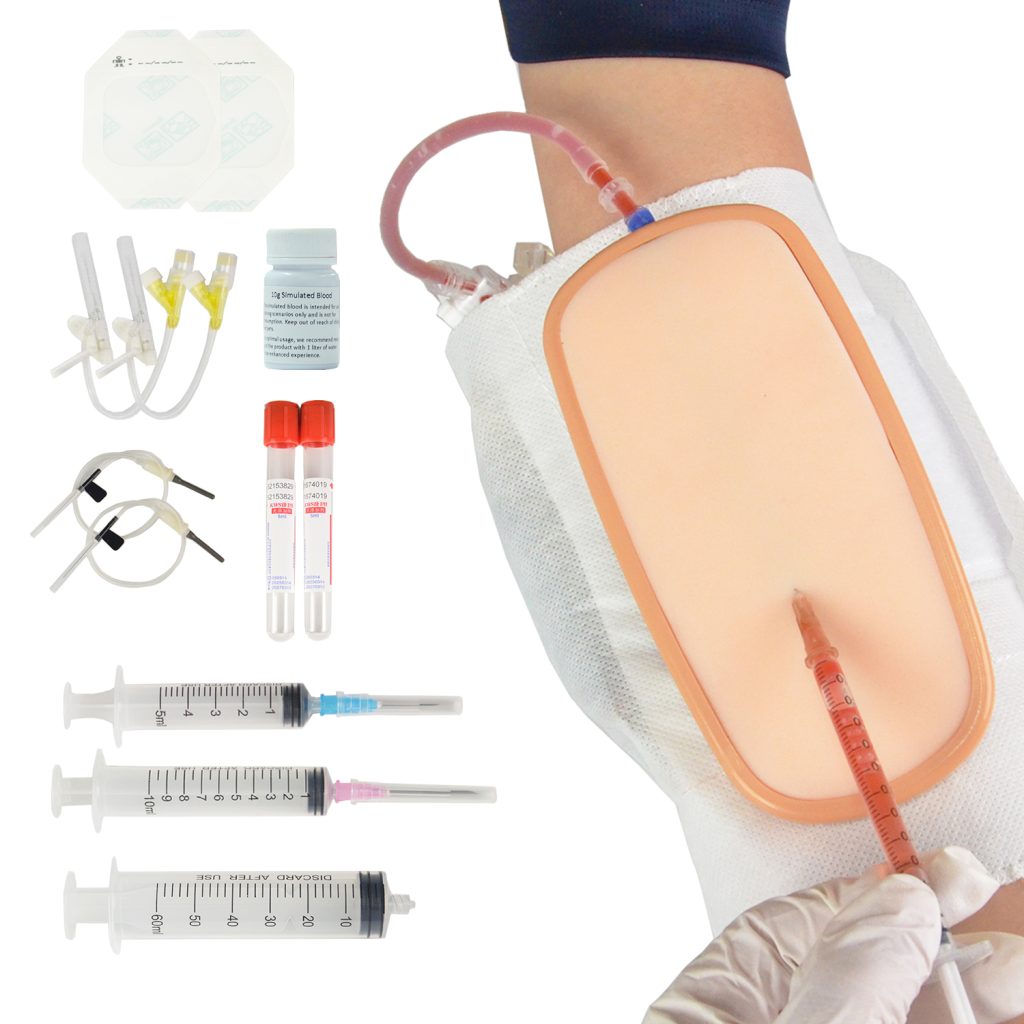
This kit ranks as one of the Best Phlebotomy practice kit choices for students who want to simulate the patient interaction aspect of blood drawing. Unlike static arm models, this wearable version allows a “standardized patient” or even the student themselves to wear the device, adding a layer of realism regarding patient movement and arm positioning.
The wearable IV practice kit is suitable for blood drawing practice and indwelling needle practice. It is a compact training kit that includes a blood infusion system in a sleeve. The IV pad is replaceable for repeated practice, making it a cost-effective solution for long-term study.
| Specification | Detail |
|---|---|
| Weight | 0.8 lbs |
| Dimensions | 7.8 × 5.9 × 2.3 in |
| Best For | Venepuncture and Catheter Access |
2. Advanced Life-Size Phlebotomy Simulation Arm
For those seeking the Best Phlebotomy practice kit for comprehensive classroom training, the full-size arm remains the gold standard. These models usually feature an anatomical venous system including the cephalic, basilic, and median cubital veins. The simulated skin is designed to feel like human tissue, and the venous system can be pressurized with “artificial blood” to provide realistic flashback upon entry.
3. Multi-Layer Venipuncture Practice Pad
Sometimes the Best Phlebotomy practice kit is the most portable one. Multi-layer pads are designed to simulate the skin, subcutaneous fat, and muscle layers. They are excellent for practicing the “blind stick” technique where students must palpate the vein rather than see it. Many instructors recommend these pads for the first week of training to master needle control before moving on to wearable or arm models.
4. Ingrown Toenail Removal Practice Kit
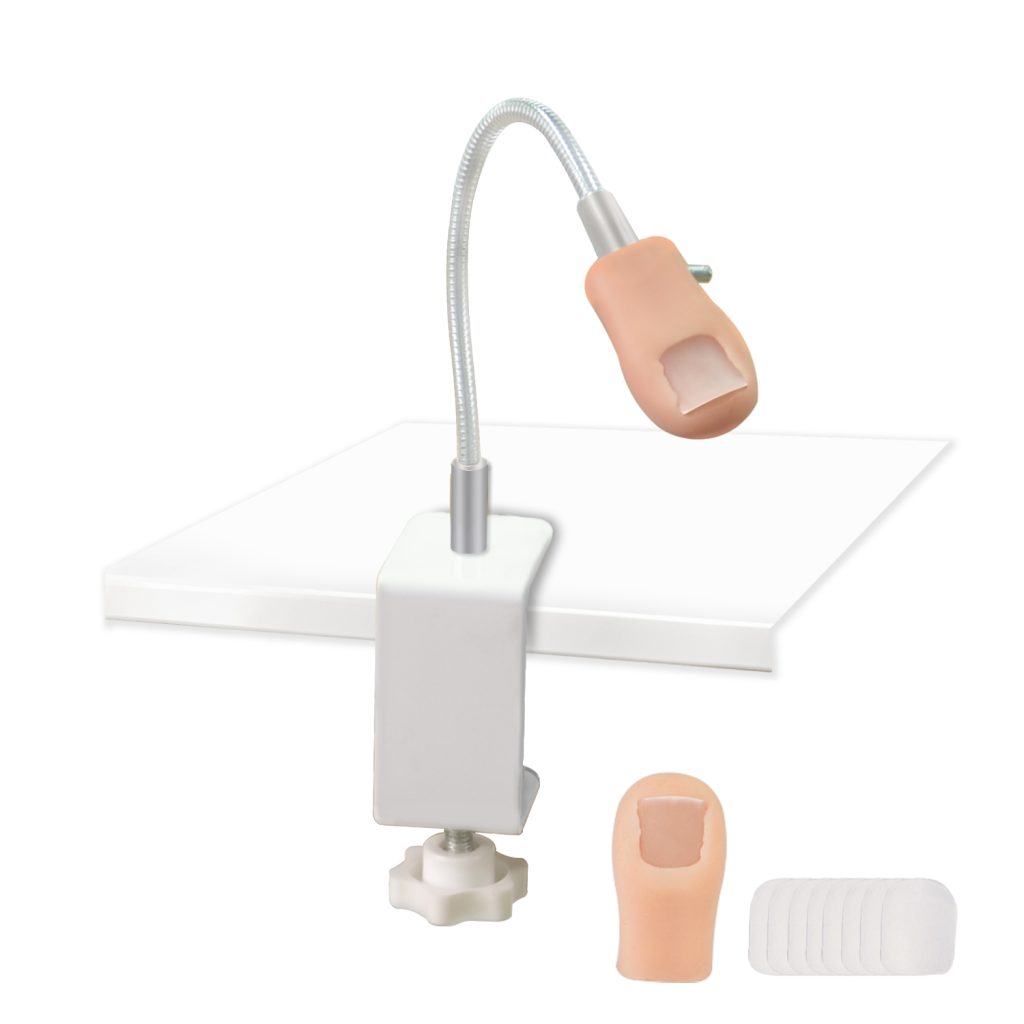
While phlebotomy focuses on the venous system, comprehensive medical training often requires a broader range of minor surgical skills. While not strictly a blood-drawing tool, the Ingrown Toenail Removal Practice Kit is frequently bundled in advanced clinical skills labs alongside the Best Phlebotomy practice kit options to provide a well-rounded procedural education.
The ingrown toenail removal kit includes 2 toe models with toenails. Both the simulated toe and nails can be replaced. With a flexible stand to allow easy maneuver, it is an excellent tool for podiatry and general clinical skills. The flexible stand comes with a desk clamp to hold super firmly on the desk during procedure practice.
| Specification | Detail |
|---|---|
| Weight | 0.6 lbs |
| Dimensions | 3.94 × 3.94 × 1.97 in |
| Included Components | Stand with clamp, 2 toe models, 8 replacement nails |
5. Pediatric Phlebotomy Simulation Butterfly Kit
Drawing blood from a child is vastly different from an adult. The Best Phlebotomy practice kit for pediatric specialization uses smaller, more fragile vein simulations. These kits often emphasize the use of “butterfly” needles and vacuum tubes suited for small-volume collection. Mastery of these kits prepares students for the higher precision and softer touch required in pediatrics.
Comparison Summary Table
| Kit Type | Primary Use | Portability | Realism Level |
|---|---|---|---|
| Wearable IV Sleeve | Venepuncture / Patient Interaction | High | Very High |
| Simulation Arm | Comprehensive Anatomy Study | Low | High |
| Venipuncture Pad | Needle Angle Mastery | Extreme | Moderate |
| Ingrown Toenail Kit | Minor Surgical Skills | Moderate | High (Replaceable Nails) |
| Pediatric Kit | Specialized Butterfly Practice | High | High |
Frequently Asked Questions
Can I use a practice kit for more than just blood drawing?
Yes. Many of the Best Phlebotomy practice kit options, like the wearable IV kit, are also perfect for practicing IV catheter insertion and fluid infusion. Specialized kits like the toenail removal model allow for surgical skill development.
How long do the replaceable pads and nails last?
Generally, a high-quality silicone pad can withstand 100 to 200 punctures before the surface begins to show “tracking” or leakage. For the toenail kit, the included 8 replacement nails provide ample opportunities to master the excision technique.
Is artificial blood included with these kits?
Most full arms and wearable kits include a powder or concentrate to create simulated blood. This is essential for practicing the “flashback” response that confirms you have successfully entered the vein.
References and Training Standards
- American Society for Clinical Pathology (ASCP) – Phlebotomy Technician (PBT) Certification Standards.
- National Healthcareer Association (NHA) – Clinical Skill Competency Guidelines 2026.