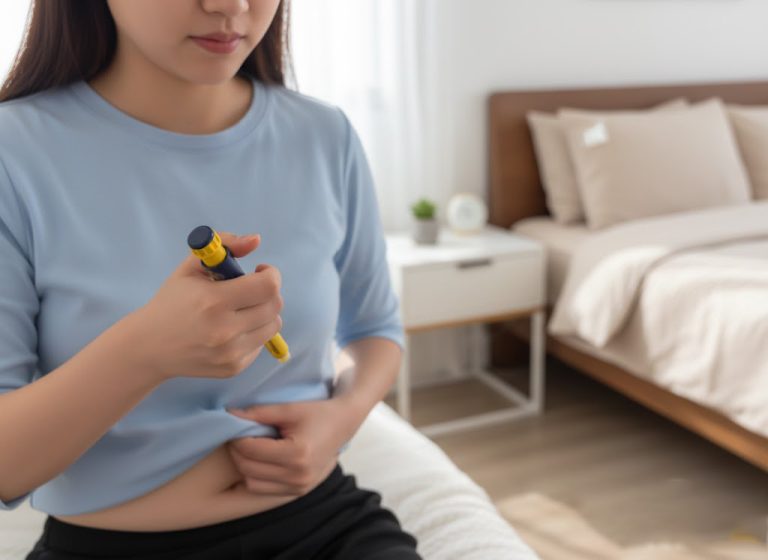
In the rapidly evolving landscape of medical education, the demand for high-fidelity simulation tools has never been greater. As we move into 2026, healthcare professionals and students are seeking more than just a piece of foam; they require a comprehensive Intramuscular Injection practice Kit that mimics human anatomy with startling accuracy. Intramuscular (IM) injections are a fundamental skill in nursing, pharmacy, and emergency medicine, yet mastering the correct angle, depth, and anatomical landmarks remains a challenge for many beginners.
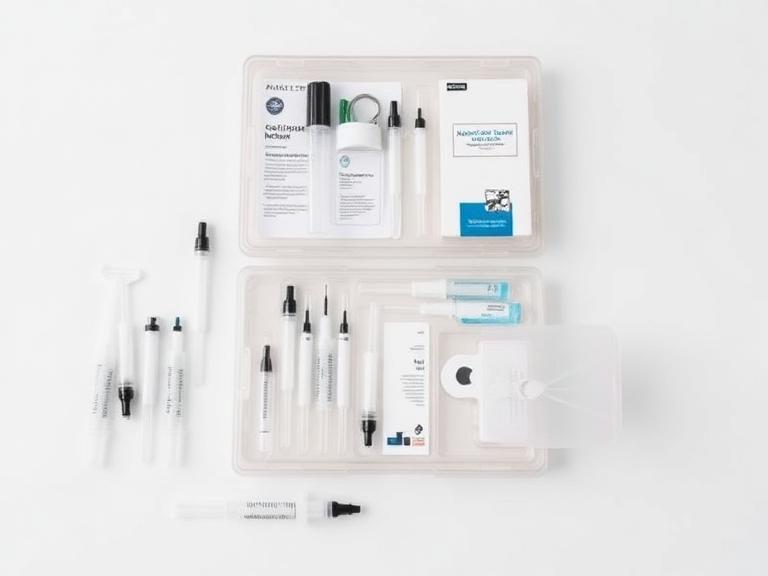
A high-quality Intramuscular Injection practice Kit provides a risk-free environment to perfect these techniques before ever touching a patient. In this guide, we analyze the top six simulation models available in 2026, focusing on durability, tissue realism, and multitasking capabilities. Whether you are a solo student or a simulation lab coordinator, choosing the right equipment is essential for developing the muscle memory required for clinical excellence.
Table of Contents
- Why an Intramuscular Injection Practice Kit is Essential in 2026
- 1. The Professional IM Simulation Torso
- 2. Wearable Intradermal Injection Pad with Unlimited Spots
- 3. 2 IN 1 Multitask Wound Packing Training Kit
- 4. The Suture Buddy IM Training Model
- 5. 3BS Complete Intramuscular Training Suite
- 6. VATA Life/form IM Task Trainer
- Summary Table: Comparing the Best Kits
- Buyer’s Guide: Key Features to Look For
- Frequently Asked Questions
- Technical References
Why an Intramuscular Injection Practice Kit is Essential in 2026
The year 2026 marks a turning point where medical institutions are moving away from traditional, static manikins toward wearable task trainers. The modern Intramuscular Injection practice Kit is designed to be strapped onto a live volunteer or a manikin, allowing students to practice not only the technical skill of needle insertion but also patient communication and bedside manner. This hybrid simulation is proven to reduce student anxiety during their first clinical rotations.
Furthermore, an Intramuscular Injection practice Kit must now handle various fluids without leaking or molding. The materials used in 2026, such as advanced silicone and RealLayer technology, simulate the resistance of the epidermis, dermis, and muscle tissue, providing tactile feedback that is indistinguishable from a real patient. This realism is vital for preventing bone contact and ensuring the medication is delivered to the correct tissue depth.
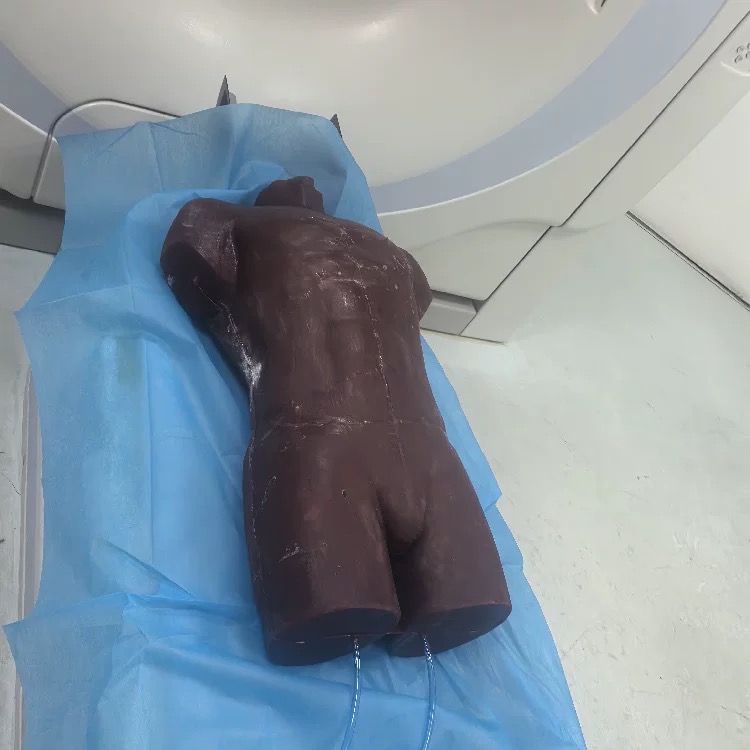
1. The Professional IM Simulation Torso
For large-scale medical schools, the IM Simulation Torso remains the gold standard. This model features palpable anatomical landmarks, including the greater trochanter, iliac spines, and sacrum. It allows for the practice of the three main IM sites: dorsogluteal, ventrogluteal, and vastus lateralis. Its primary advantage is the built-in electronic feedback system that alerts the user if the needle strikes a “nerve” or “bone.”
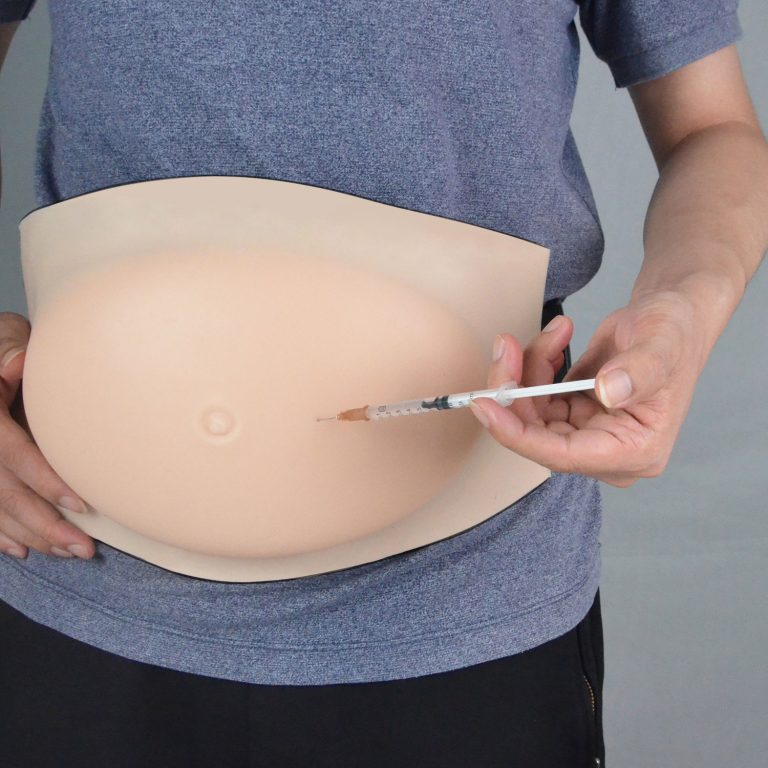
2. Wearable Intradermal Injection Pad with Unlimited Injection Spots
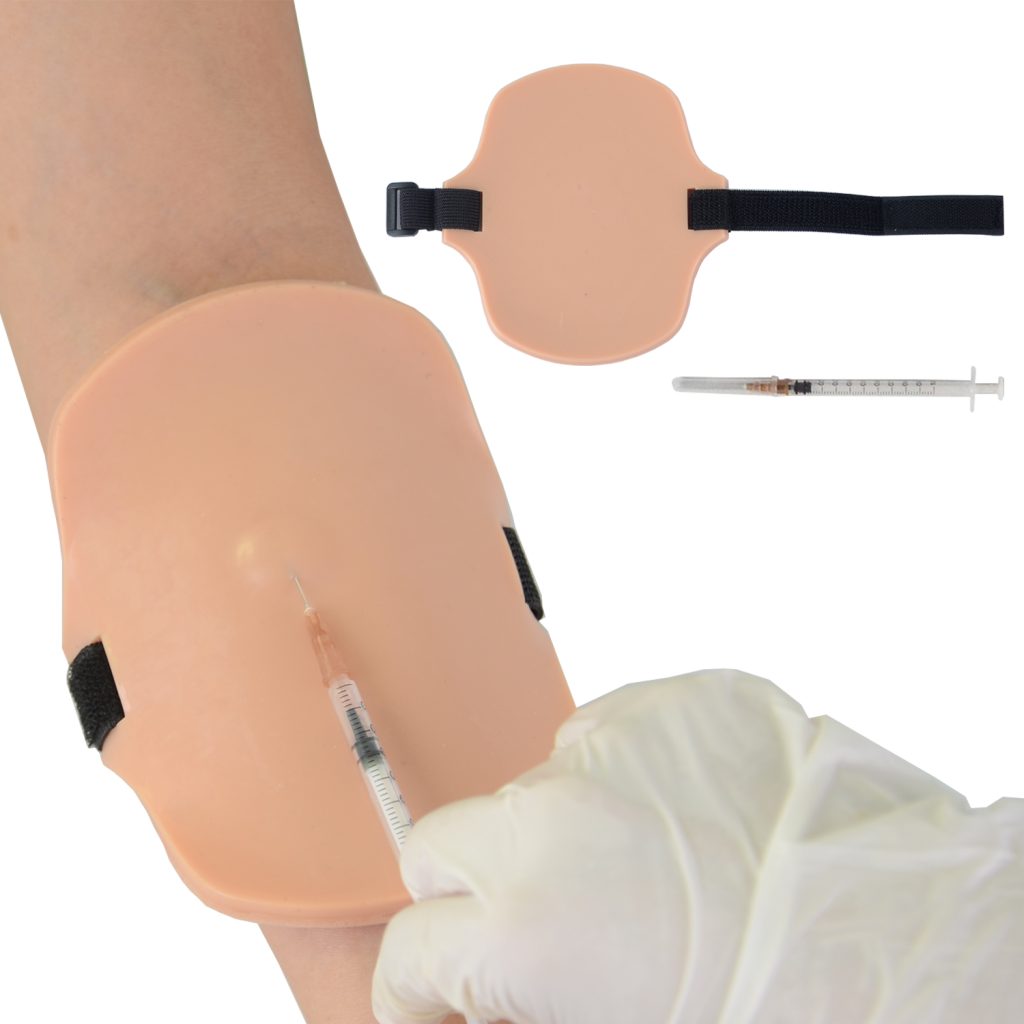
While primarily focused on intradermal skills, this kit is an essential companion for any comprehensive Intramuscular Injection practice Kit setup. Mastery of shallow injections is often a prerequisite for deeper IM work. This unique wearable pad offers unlimited spots for training, providing significantly more longevity than traditional models.
Key Features:
- Unlimited Spots: Offers more training positions than ever before with repeated use capability.
- Visible Feedback: A clear “wheal” or “bleb” is visible upon correct injection, providing immediate student validation.
- Portability: Weighing only 0.4 lbs with dimensions of 7 x 7 x 0.7 in, it is the perfect portable trainer for clinical rotations.
- Versatility: Use it as a tabletop model or strap it on for realistic patient-interaction scenarios.
3. 2 IN 1 Multitask Wound Packing Training Kit
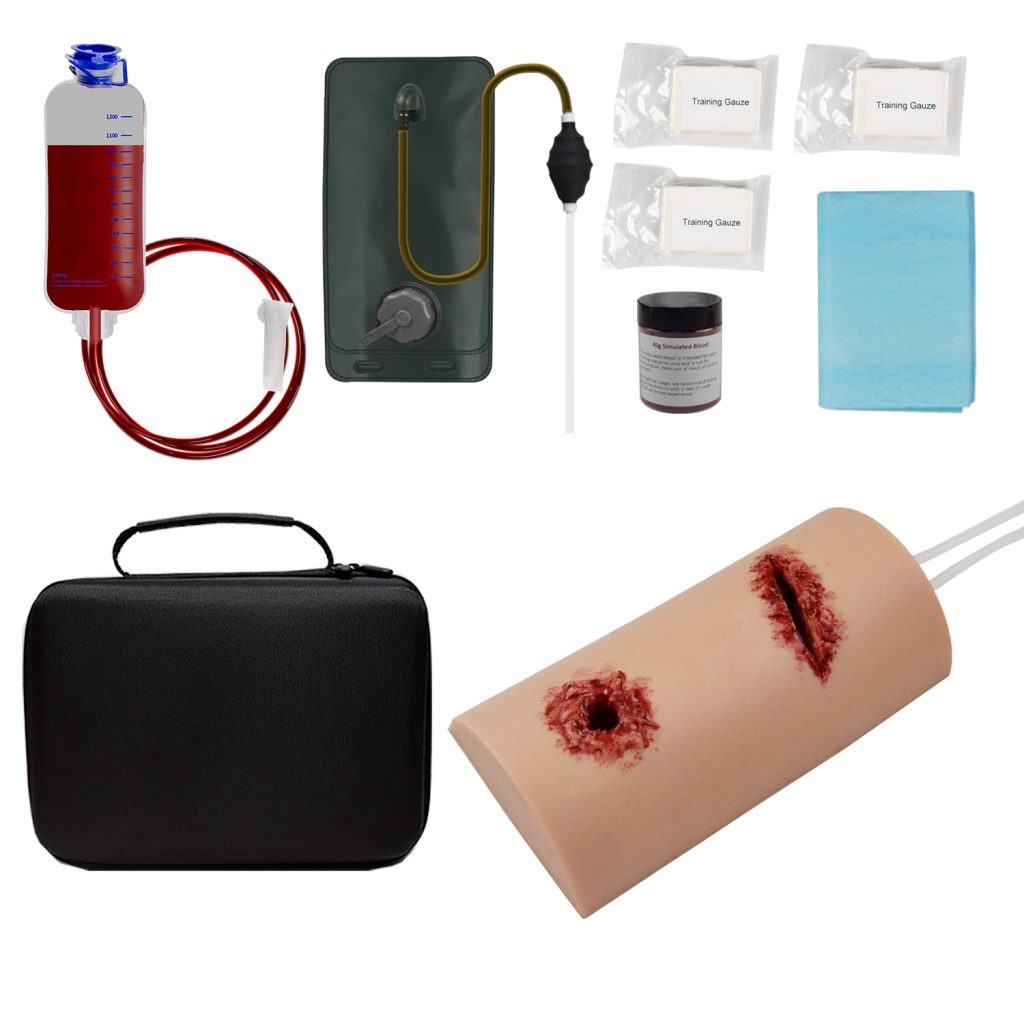
For emergency responders and tactical medical teams, an Intramuscular Injection practice Kit is often part of a larger trauma response. This 2-in-1 multitask trainer bridge the gap between simple injections and complex wound management. It is a highly economic option for first aid, TCCC courses, and EMT training centers.
Key Features:
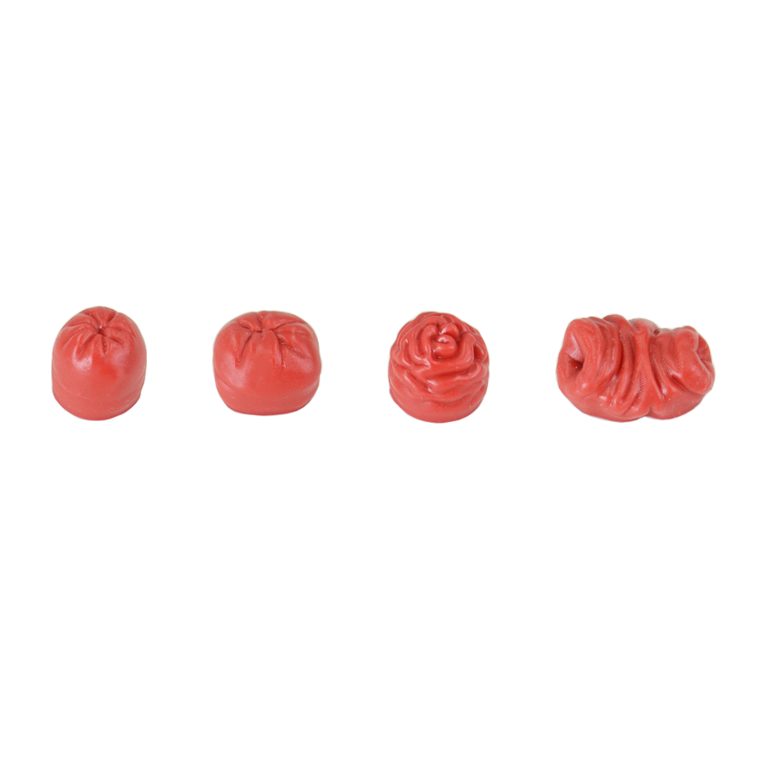
- Dual Simulation: Features both laceration and bullet wounds with lines for bleeding simulation.
- Realistic Flow: Includes two bleeding modes—steady flow and arterial patterns—controlled by a blood pump bag to simulate high-pressure hemorrhage.
- One-Way Valve: Prevents faux blood from flowing backward, maintaining the realism of the simulation.
- Complete Set: Includes a wound pack trainer, blood reservoir bags, fake blood powder, training gauze, and a portable carry case.
4. The Suture Buddy IM Training Model
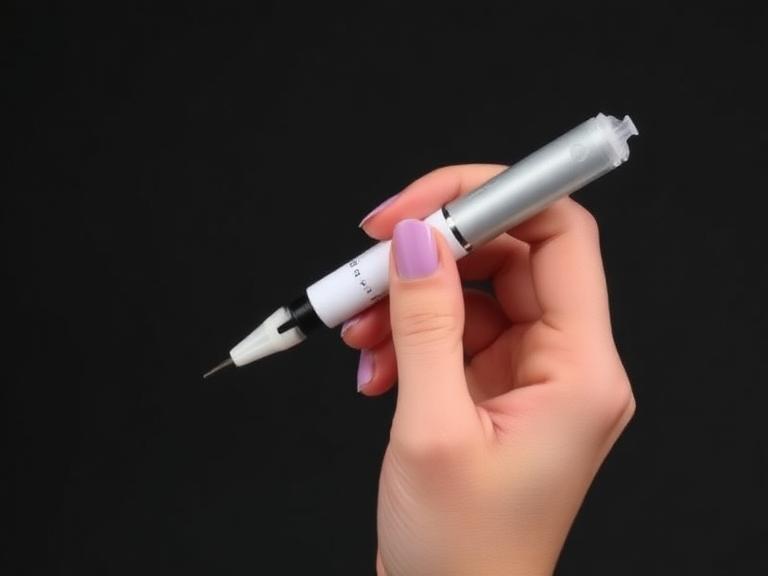
For the individual student on a budget, the Suture Buddy provides a streamlined Intramuscular Injection practice Kit experience. It is a tabletop pad that focuses purely on the sensation of needle resistance. It usually comes pre-packaged with a 3mL syringe and a 23G needle, making it a “ready-to-go” kit for home practice. While it lacks the anatomical landmarks of a torso, its durability allows for hundreds of punctures without visible degradation of the surface material.
5. 3BS Complete Intramuscular Training Suite
3B Scientific has released the most comprehensive Intramuscular Injection practice Kit suite for 2026. This is not just a pad, but a collection of modular trainers for the upper arm, upper leg, and buttocks. This suite allows an instructor to set up multiple stations simultaneously. The “three-quarter” plate design within the muscle layer ensures that students feel the correct needle depth and learn to avoid bone contact, which is the most common error in IM administration.
6. VATA Life/form IM Task Trainer
The VATA Life/form model is prized for its “flesh-like” consistency. Using BIOLIKE 2 material, this Intramuscular Injection practice Kit is specifically engineered to not show needle holes. In a high-volume classroom setting, this self-healing property saves institutions thousands of dollars in replacement costs. The model is also fluid-absorbent; after a session, the fluid can be squeezed out of the foam core, and the pad can be dried and stored easily.
Summary Table: Comparing the Best Kits
| Kit Name | Primary Use | Key Advantage | Feedback Type |
|---|---|---|---|
| Simulation Torso | Anatomical Site Selection | Realistic Bone Structure | Electronic Audio/Visual |
| Wearable ID Pad | Skin/Shallow Injection | Unlimited Injection Spots | Visual Wheal Formation |
| 2-in-1 Multitask Kit | Trauma & Wound Packing | Arterial Bleed Simulation | Tactile & Visual Flow |
| Suture Buddy Pad | Basic Needle Skills | Affordability | Tactile Resistance |
| 3BS Suite | Comprehensive Training | Modular (Arm, Leg, Buttock) | Tactile Depth Sensing |
| VATA Task Trainer | High-Volume Practice | Self-Healing BIOLIKE Material | Tactile Resistance |
Buyer’s Guide: Key Features to Look For
Tissue Realism and Layering
A professional Intramuscular Injection practice Kit must have distinct layers representing the epidermis, dermis, subcutaneous fat, and muscle. The resistance should change as the needle passes through each layer. If the kit feels like a uniform piece of rubber, it will not accurately prepare a student for the “pop” felt when the needle enters the muscle fascia.
Durability and Self-Healing Properties
In 2026, the best kits use high-density silicone or specialized elastomers that “close” the puncture site after the needle is withdrawn. This is critical for preventing leakage when using real fluids or saline during practice. Always check if the Intramuscular Injection practice Kit shows “tracks” or holes after repeated use.
Fluid Management
Does the kit allow for liquid injection? If so, how is the liquid removed? Look for kits with a removable foam core or a drainage port. Without proper drainage, an Intramuscular Injection practice Kit can become a breeding ground for mold and bacteria, significantly shortening its lifespan.
Frequently Asked Questions
Can I use real medication in my Intramuscular Injection practice Kit?
It is strictly recommended to use only water or distilled water for practice. Real medications can leave residues, clog the “tissue” layers, or create odors that damage the silicone and foam components of the kit.
How often do I need to replace the skin on my injection pad?
This depends on the material. High-quality BIOLIKE or medical-grade silicone pads can withstand between 500 and 1,000 punctures. Once the surface starts leaking or “pitting,” it is time to replace the skin or the entire pad.
Why is the 2-in-1 Wound Packing kit included in an IM list?
In modern tactical medicine (TCCC), practitioners often have to administer emergency IM injections (like epinephrine or morphine) while simultaneously managing a bleeding wound. Multitask trainers help students manage the stress of multiple procedures at once.
Are wearable kits better than tabletop models?
Wearable kits are superior for teaching “the human element.” When a student has to inject a pad strapped to a person’s arm, they must consider the patient’s position, comfort, and communication, which a tabletop model cannot simulate.
Technical References
- American Association of Colleges of Nursing (AACN). (2025). Clinical Simulation Standards for Nursing Excellence.
- Journal of Medical Simulation. (2024). Tactile Feedback Comparison of Synthetic Tissue vs. Animal Models.
Mastering the art of injection starts with the right foundation. Choose your Intramuscular Injection practice Kit today and bridge the gap between classroom theory and clinical reality.