Introduction
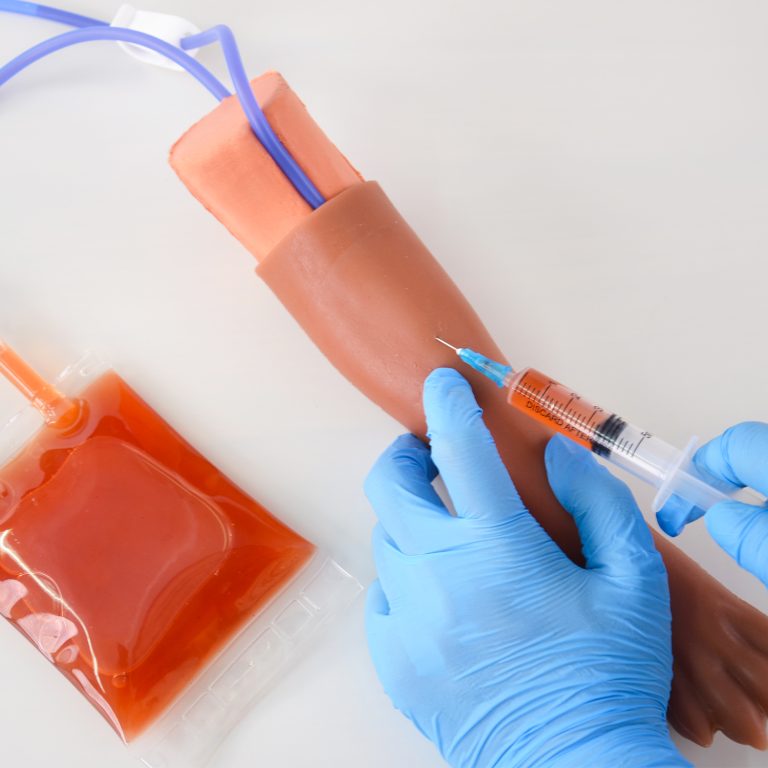
Mastering canine blood draw is a vital skill for any veterinary professional. For beginners, using a Canine Blood Draw Model is a helpful way to practice technique and build confidence before working with live patients. This guide covers how these models support clinical training.
1. The Clinical Challenge: Why “Practice on the Job” is No Longer Enough
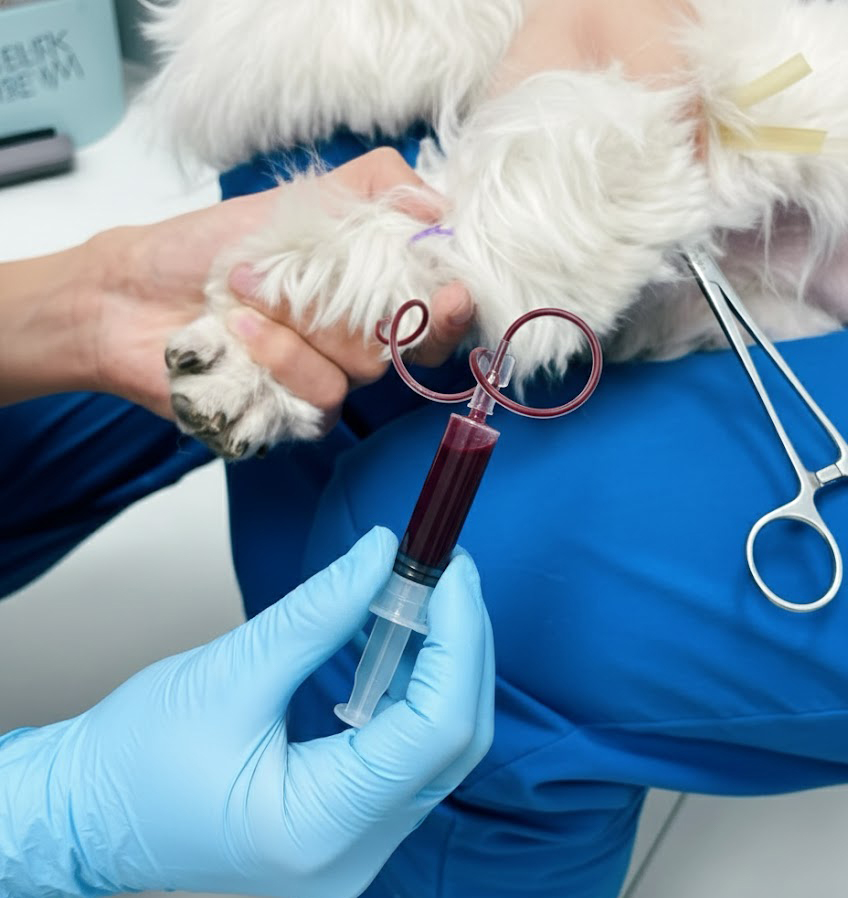
The traditional “see one, do one, teach one” method on live animals is increasingly viewed as an ethical and clinical risk. According to the American Animal Hospital Association (AAHA), minimizing patient stress (Fear Free handling) is now a core component of the standard of care.
A Canine Blood Draw Model addresses the three primary challenges of student training:
- Sample Integrity: Improper technique leads to hemolysis (ruptured red blood cells), forcing a re-draw and increasing clinic costs.
- Vessel Collapse: Newcomers often apply excessive vacuum pressure. Mastering the “controlled pull” is only possible through high-repetition practice.
- Animal Welfare: Repeated failed attempts cause hematomas and “white coat syndrome” in canine patients.
2. Technical Mastery: Equipment Selection & Anatomical Precision
To achieve a “one-stick” success rate, veterinary nurses must master the relationship between anatomy and equipment—a skill best honed on a dog IV/blood draw practice kit.
The Gauge & Flow Physics
The choice of needle is a science. On a canine blood draw model, students can feel the difference in resistance between:
- 20G (Yellow): Ideal for large breeds or rapid large-volume collection.
- 22G (Black): The clinical “Gold Standard” for most canine nursing.
- 25G (Blue): For fragile veins. Tip: High suction on a 25G needle often leads to hemolysis, a common mistake students can troubleshoot on a simulator.
Mastering the “Anchor”
The most common reason for a failed draw is a “rolling” vein. A professional canine venipuncture simulator allows students to practice using their non-dominant thumb to apply distal tension, immobilizing the vessel and creating a stationary target.
Choosing the Correct Syringe Size
- 1mL or 3mL Syringes: These are ideal for most diagnostic draws. A 3mL syringe provides manageable negative pressure, making it the best choice for beginners.
- 5mL to 12mL Syringes: Used when multiple tests (CBC, Chemistry, etc.) are required.
- Expert Tip: Avoid using a large 10mL syringe on a small vein. The excessive vacuum pressure can cause the vein to collapse instantly, cutting off the blood flow.
3. Why Dog Blood Draw Model is Helpful Resource for Classrooms
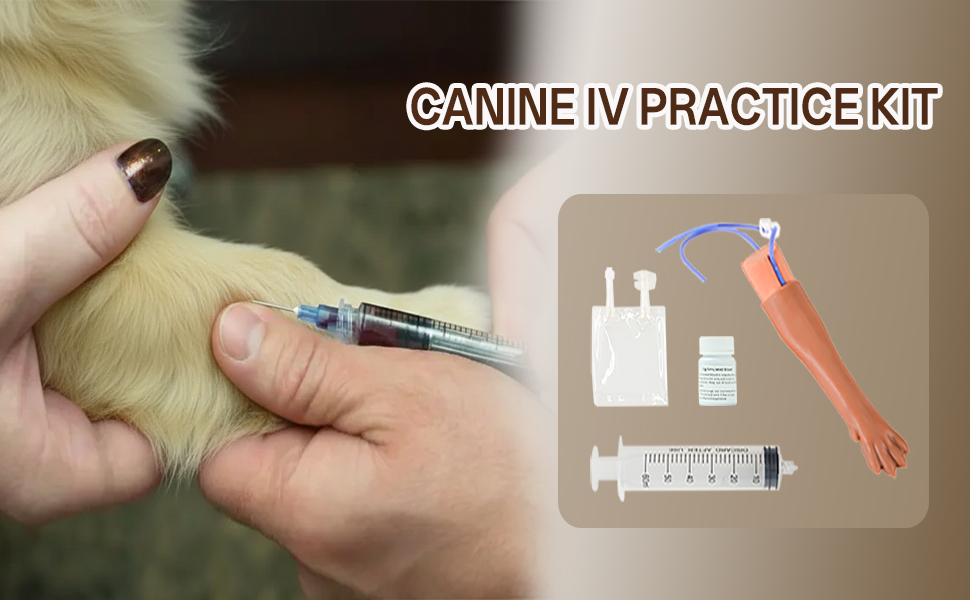
In 2026, the ethical shift toward “Simulation-First” training is undeniable. Utilizing a high-fidelity model like the Medtacedu Dog IV Practice Kit is the secret to building clinical confidence.
Key Advantages:
- Zero-Risk Environment: Students can fail, troubleshoot, and retry without causing hematomas or pain to a living creature.
- Realistic Feedback: High-quality models provide a realistic “pop” as the needle enters the lumen and offer a visual flashback of simulated blood.
- Procedural Muscle Memory: It allows students to repeat the entire workflow—from alcohol prep to switching Vacutainer tubes—until it becomes second nature.
- Cost Efficiency: The self-healing skin and replaceable vein systems make it a durable, long-term investment for nursing programs.
FAQ: Common Questions About Canine Venipuncture
Q: How can I prevent the vein from collapsing during a draw? A: This is usually caused by excessive negative pressure. If using a syringe, pull the plunger back slowly and steadily. Practice this “controlled pull” on the Dog IV Model to master the rhythm.
Q: Why did I get a “flash” of blood but then the flow stopped? A: You likely went through the vein (transfixion) or the needle tip is against the vessel wall. On a simulation model, you can learn to slightly retract or adjust the angle without harming a patient.
Q: Can simulation models truly replace live animal practice? A: Simulation is the bridge. It allows for the 100+ repetitions needed to automate hand movements. Research in the Journal of Veterinary Medical Education suggests that students trained on high-fidelity models like the MedTacEdu Canine Simulator exhibit significantly higher confidence and success rates in clinical rotations.
Conclusion: Bridging the Gap to Clinical Excellence
Mastering canine venipuncture is a journey of precision and empathy. By integrating the Advanced Canine Blood Draw Training Model into veterinary nursing curricula, we prioritize both student growth and animal welfare.