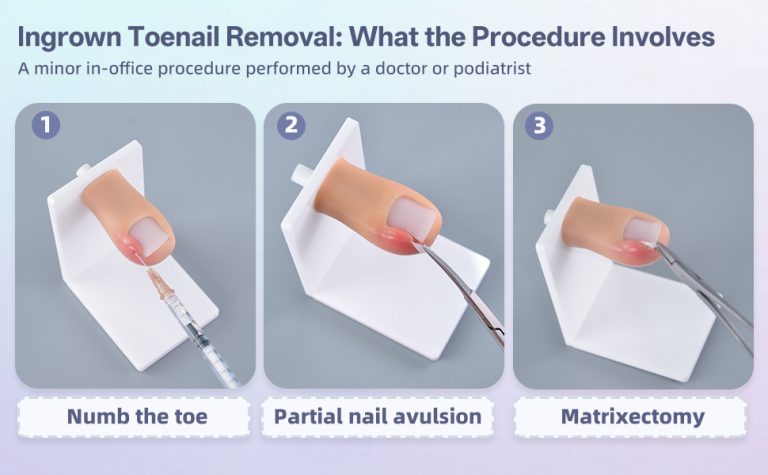
An ingrown toenail happens when the edge of a nail — almost always the big toe — grows into the soft skin beside it, causing pain, redness, and swelling. Most early ingrown toenails can be eased at home, but some need a doctor, and a few should never be self-treated at all. This guide explains what causes ingrown toenails, how to recognise the symptoms (including infection), how to treat one at home safely, how to prevent them, and exactly when to stop and see a professional.
Important: This article is educational. If you have diabetes, poor circulation, or nerve problems in your feet, do not self-treat an ingrown toenail — see a doctor or podiatrist promptly, because foot problems can become serious quickly.
What Is an Ingrown Toenail (and What Does It Look Like)?
An ingrown toenail (medically, onychocryptosis) is a nail whose side or corner curves down and presses into the surrounding skin instead of growing cleanly over the top. The classic look is a red, swollen, tender ridge of skin along one edge of the toenail, where the nail seems to disappear into the flesh. As it progresses you may see clear fluid, and — if it becomes infected — yellow or white pus and a shiny, puffy bulge of skin over the nail edge. The big toe is by far the most commonly affected.
What Causes Ingrown Toenails? (How Do They Happen?)
Ingrown toenails happen when something pushes the nail edge into the skin, or changes how the nail grows. The most common causes are:
- Cutting nails too short or rounding the corners — this is the single biggest cause. A rounded nail edge can grow down into the skin instead of straight out.
- Tight or narrow shoes (and tight socks) that squeeze the toes together.
- Injury to the toe — stubbing it, or repeated pressure from running and sports.
- Naturally curved or thick nails, which often run in families.
- Sweaty feet and poor foot hygiene, which soften the skin and make it easier for the nail to dig in.
- Picking or tearing at the toenails rather than trimming them cleanly.
Ingrown Toenail Symptoms: Early vs Infected
Catching an ingrown toenail early makes home care far more likely to work. Symptoms usually progress in stages:
- Early (inflamed): pain or tenderness along one side of the nail, mild redness, and slight swelling. The area may hurt when you press it or wear closed shoes.
- Worsening: more swelling, the skin feeling tight and warm, and sometimes a small amount of clear or blood-tinged fluid.
- Infected: increasing pain (often throbbing), spreading redness and warmth, pus (yellow or white), and an overgrowth of soft, shiny, sometimes bleeding tissue along the nail fold. Infection needs medical attention.
How to Treat an Ingrown Toenail at Home
For an early, uninfected ingrown toenail in an otherwise healthy person, conservative home care often resolves it within a week or two:
- Soak the foot in warm (not hot) water for 15–20 minutes, three to four times a day. This softens the skin and nail and eases pain.
- Gently encourage the nail edge up. After soaking, you can tuck a tiny wisp of clean cotton or waxed dental floss under the corner of the nail to coax it to grow over the skin rather than into it. Change it daily and stop if it hurts.
- Keep the area clean and dry between soaks, and dab on an over-the-counter antibiotic ointment if the skin is broken.
- Wear roomy, open-toed or soft shoes until it settles, so nothing presses on the toe.
- Use over-the-counter pain relief (such as acetaminophen or ibuprofen) if needed.
- Trim straight across — later. Don’t try to cut the ingrowing spike out during a flare-up. Once it has healed, trim the nail straight across and not too short.
What not to do: don’t repeatedly cut down the side of the nail, don’t dig under it with sharp tools, and skip the popular “cut a V-notch in the middle” trick — it does not work and risks infection. If home care isn’t helping after a week or two, it’s time to see a professional rather than escalating the bathroom surgery.
What About Pus or an Infected Ingrown Toenail?
If you see pus, spreading redness, warmth, or feel throbbing pain, the toe is likely infected. Do not try to drain or squeeze the pus out yourself — digging into an infected toe can push the infection deeper and make it worse. Instead:
- Keep soaking the foot in warm water and keep it clean and dry.
- See a doctor or podiatrist. They can safely drain it if needed, prescribe antibiotics, and remove the offending nail edge under local anaesthetic if appropriate.
- Seek care promptly (urgently if you have diabetes or poor circulation) if redness is spreading, you develop a fever, or the pain is severe.
For what an in-office removal actually involves — partial nail removal, the procedure, and recovery — see our companion guide on ingrown toenail removal and surgery (linked below once published).
When to See a Doctor
Stop home care and see a doctor or podiatrist if:
- You have diabetes, poor circulation, or numbness in your feet — see them at the first sign, do not wait.
- There are signs of infection (pus, spreading redness, warmth, fever, severe pain).
- The ingrown toenail keeps coming back, or both sides or several toes are affected.
- Home care hasn’t improved things after one to two weeks.
- The nail is very thick, deformed, or the pain is stopping you walking normally.
If an ingrown toenail keeps coming back, becomes infected, or no longer responds to home care, a doctor or podiatrist can remove it with a quick in-office procedure. Learn what to expect in our guide to ingrown toenail removal: partial nail avulsion, surgery, and recovery.
How to Prevent Ingrown Toenails
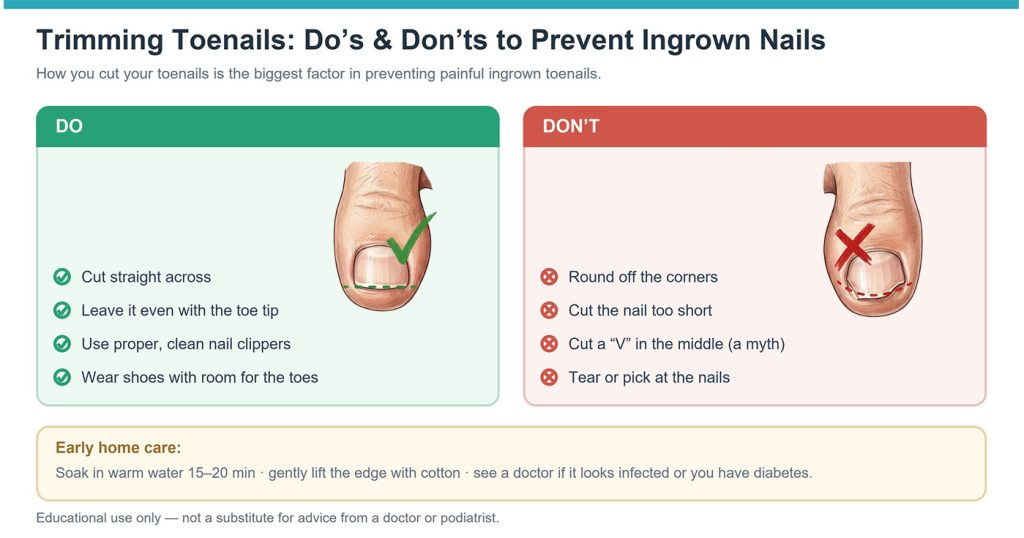
Most ingrown toenails are preventable with a few habits:
- Trim toenails straight across, not curved, and not shorter than the tip of the toe.
- Use proper nail clippers and don’t tear or pick at nails.
- Wear shoes and socks with room for your toes; avoid repeatedly cramming feet into tight footwear.
- Keep feet clean and dry, and protect toes during sports.
- If your nails are naturally very curved or thick, ask a podiatrist about long-term options to stop them recurring.
Frequently Asked Questions (FAQ)
How long does an ingrown toenail take to heal?
A mild, early ingrown toenail treated with warm soaks and good footwear often settles within one to two weeks. An infected one, or one needing a procedure, takes longer — and recovery after a minor nail procedure is usually a few weeks. If it isn’t clearly improving after two weeks of home care, see a professional.
Can an ingrown toenail heal on its own?
A very mild one sometimes settles by itself once you switch to roomier shoes and trim properly. But many keep getting worse without help, and an infected toe will not clear on its own — it needs treatment.
Should you cut a V-shape or notch in the nail?
No. Cutting a “V” in the middle of the nail is a common myth — nails grow from the base, not the centre, so it does nothing to change how the edge grows, and it can damage the nail and invite infection.
Is it safe to cut out an ingrown toenail yourself at home?
Removing the ingrowing nail edge with scissors or clippers (“bathroom surgery”) is not recommended. It often leaves a sharp spike behind, can drive the nail deeper, and carries a real infection risk. Persistent or infected ingrown toenails should be handled by a clinician.
Can you run or exercise with an ingrown toenail?
It’s best to rest the toe and switch to open or roomy shoes while it’s painful — running and tight athletic shoes press on the nail and make it worse. Return to activity once the pain and swelling have settled.
Is an ingrown toenail the same as a nail fungal infection?
No. An ingrown toenail is a nail edge growing into the skin; a fungal infection thickens and discolours the whole nail. They can occur together, but they are different problems with different treatments — if you’re unsure, a podiatrist can tell them apart.
When is an ingrown toenail an emergency?
Seek care urgently if you have diabetes or poor circulation and notice any ingrown toenail, or if anyone develops spreading redness up the foot, a fever, or severe throbbing pain — these can signal a serious infection.
Sources
- American Academy of Family Physicians (AAFP) / FamilyDoctor.org — Ingrown toenails
- NHS — Ingrown toenail
- Mayo Clinic — Ingrown toenails: symptoms and causes
- StatPearls / NCBI Bookshelf — Ingrown Toenails (Onychocryptosis)
- American Academy of Dermatology (AAD) — How to treat an ingrown toenail
This article is for general education only and is not a substitute for professional medical advice. People with diabetes, poor circulation, or nerve problems should not self-treat ingrown toenails and should see a doctor or podiatrist.
🩺 For Students, Podiatry & Training Teams
Learning safe nail technique on a model first builds confidence before treating patients. Our Ingrown Toenail Removal Practice Kit and Ingrown Toenail Trainer with Replaceable Toes & Nails let students practise nail removal and toe care repeatedly with replaceable parts.