Breech presentation means the baby’s buttocks or feet, rather than the head, are the first part to enter the pelvis. Students usually learn that there are three types: frank, complete, and footling. Telling them apart takes more than memorizing names. The type depends on how the hips and knees are bent, and that leg arrangement changes how well the presenting part fills the pelvis. This guide explains each type, why the distinction matters, and how to show all three with a fetal doll and pelvis.
Breech is common earlier in pregnancy and becomes much less common by term, because most babies turn head-down on their own. Around 3–4% of babies are still breech at term. In every type the lie is longitudinal, the same as a head-first baby. Only the leading part is different. For how breech fits among the other presentations, see Fetal Position and Presentation Explained.
The Three Types at a Glance
All three types are named by what the legs are doing, so start with two questions: are the hips flexed, and are the knees flexed or straight?
| Type | Hips | Knees | What presents first |
|---|---|---|---|
| Frank breech | Flexed | Extended (straight) | Buttocks, with the feet up near the face |
| Complete breech | Flexed | Flexed | Buttocks, with the feet beside them |
| Footling breech | One or both extended | Extended | One foot (single footling) or both feet (double footling) |
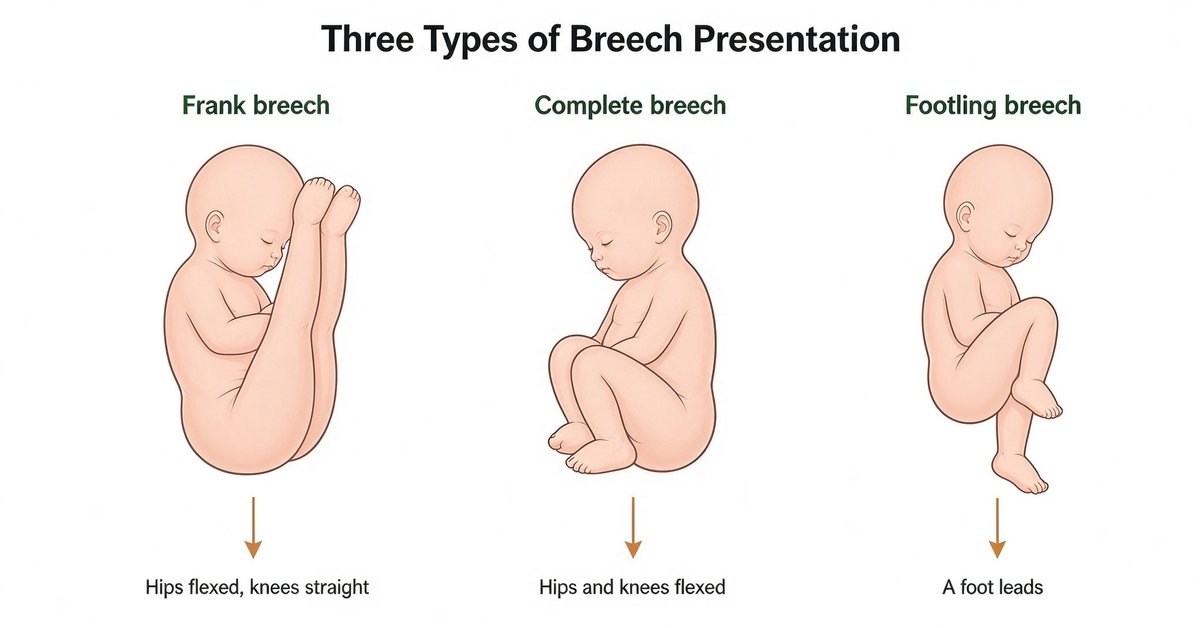
Figure 1. Frank, complete, and footling breech.
A helpful shorthand: in frank breech the baby is folded in a “pike,” in complete breech the baby is sitting cross-legged, and in footling breech the baby is standing on one or both feet.
Frank Breech
In frank breech, the hips are flexed and the knees are straight, so the legs lie flat against the baby’s chest and abdomen with the feet near the face. The buttocks lead.
Because the buttocks and folded legs form a fairly bulky mass, frank breech fills the lower uterine segment better than the other types. That makes it the type with the lowest added risk of cord prolapse, although the risk is still higher than in a head-first presentation.
Complete Breech
In complete breech, both the hips and the knees are flexed. The baby looks as if it is sitting with its legs crossed, and the feet sit beside the buttocks.
The buttocks still lead, but the feet are close by and can slip below them during labor. If that happens, a complete breech can become a footling breech. The fit in the lower uterine segment is less snug than in frank breech, so the risk of cord prolapse is higher.
Footling Breech
In footling breech, one or both hips are extended, so one foot (single footling) or both feet (double footling) come first, ahead of the buttocks. A rarer variant is the kneeling breech, in which one or both knees lead.
Footling breech carries the highest risk of cord prolapse of the three types. A foot is small and leaves gaps around it, so it does not seal the cervix. The umbilical cord can then slip past the foot into the vagina, especially when the membranes rupture. A foot can also pass through a cervix that is not yet fully dilated, which the larger parts of the baby that follow cannot do.
Why the Type Matters
Breech in general raises two linked concerns, and the leg arrangement changes how large each one is:
- Cord prolapse. The poorer the presenting part fills the pelvis, the more room there is for the cord to slip down. Risk rises from frank to complete to footling breech.
- The largest part comes last. In a head-first birth, the head dilates the cervix and the smaller body follows. In breech, the buttocks or feet lead and are narrower than the head, so they may not dilate the cervix fully. The head, the part with the largest diameter, comes last and can be trapped. This concern is greater when the baby is premature, because the head is then large compared with the body.
Breech Positions and How They Are Written
Breech has positions just as a vertex presentation does. The reference point on the baby is the sacrum (S), so the same three-part abbreviation applies:
- LSA (left sacrum anterior): the baby’s sacrum points toward the front of the mother’s pelvis, on her left side.
- RSA, LST, RST, LSP, RSP follow the same pattern for the right side and for transverse and posterior positions.
Students who already read LOA and ROA fluently can pick this up quickly. Only the reference point changes: O for occiput in vertex, M for mentum in face, and S for sacrum in breech.
Demonstrating the Three Types on a Fetal Doll and Pelvis
Breech types are easier to understand when students can see how much of the pelvic inlet each leg arrangement fills. A fetal doll with movable limbs and a model pelvis is enough to show this.
- Set up frank breech. Fold the doll’s legs straight up along the body, feet beside the face, and bring the buttocks to the pelvic inlet. Point out how the buttocks and folded legs fill the inlet.
- Change to complete breech. Bend the knees so the feet sit beside the buttocks. Ask students what could slip below the buttocks during labor.
- Change to footling breech. Extend one leg so the foot leads, then both. Show the gap left around the foot at the inlet. This gap is where the cord can slip through.
- Show the order of delivery. With the doll in any breech type, show that the buttocks or feet, then the trunk and shoulders, then the head pass through the pelvis. Compare the size of the head with the leading part to explain why the head coming last is a concern.
A demonstration model shows anatomy and orientation. It does not reproduce the feel of a real delivery, and breech delivery techniques are taught separately in supervised clinical training.
Common Points of Confusion
- “Incomplete breech” and “footling breech” overlap. Some references use incomplete breech for any breech where one or both hips are extended, and treat footling as a subtype. Others use footling breech directly. Check which convention your course or exam follows.
- “Complete” does not mean “the most common” or “the safest.” It describes the legs: hips and knees both flexed. The name has nothing to do with outcome.
- Frank breech is not head-first. Because the feet sit by the face, students sometimes think the head is involved. The buttocks still lead.
Conclusion
Frank, complete, and footling breech are named by the position of the baby’s hips and knees. That leg arrangement decides how well the presenting part fills the pelvis, which in turn changes the risk of cord prolapse. Frank breech fills the pelvis best, and footling breech leaves the most room for the cord to slip. Teach the three leg arrangements first, then show each one at the pelvic inlet so students can see the difference in fit for themselves.
Frequently Asked Questions
Is footling breech the same as incomplete breech?
The terms overlap, and textbooks use them differently. Some sources use incomplete breech for any breech in which one or both hips are extended, so footling breech is a type of incomplete breech. Others, such as the MSD Manual, simply describe single and double footling presentations. When writing or answering exam questions, describe the hips and knees as well as giving the name, so the meaning is clear whichever convention the reader uses.
Why are some babies breech?
Many babies are breech earlier in pregnancy and turn head-down on their own as term approaches, so being born preterm is one of the most common reasons a baby is still breech at birth. Other conditions linked to breech presentation include twins or other multiple pregnancies, an unusually shaped uterus or uterine fibroids, a low-lying placenta (placenta previa), and some fetal conditions. Often no cause is found.
Can the type of breech change before or during labor?
Yes. The legs can move until the baby is born. A complete breech can become a footling breech if one or both feet slip below the buttocks, which is more likely once labor starts or the membranes rupture. For this reason, the type noted at an earlier examination may not be the type at the time of birth.
Sources
- Moldenhauer JS. Fetal Presentation, Position, and Lie (Including Breech Presentation). MSD Manual Professional Edition; reviewed January 2024, modified July 2024. https://www.msdmanuals.com/professional/gynecology-and-obstetrics/intrapartum-complications/fetal-presentation-position-and-lie-including-breech-presentation
- Gray CJ, Shanahan MM. Breech Presentation. In: StatPearls. StatPearls Publishing. https://www.ncbi.nlm.nih.gov/books/NBK448063/
- Johns Hopkins School of Medicine. OBGYN 101: Breech Delivery. https://oacapps.med.jhmi.edu/OBGYN-101/Text/Abnormal%20L&D/Breech.htm
This article is for education and training purposes only. It explains breech presentation for teaching and is not guidance for assessing or managing a real pregnancy or delivery. If you are pregnant and your baby is breech, talk with your midwife or doctor about your options.
Training Resources
MEDTACEDU’s Childbirth Education Model Set with Pelvis and Fetal Model includes a fetal doll and a female pelvis, so instructors can demonstrate frank, complete, and footling breech at the pelvic inlet and compare each with a head-first presentation. The same set is used to teach fetal position and presentation and the 7 cardinal movements of labor.
Browse MEDTACEDU’s Women’s & Reproductive Health Models for related training models.