Wound Dressing Types: How to Choose by Exudate, Depth, and Wound Bed
Compare wound dressing types by exudate, depth, wound condition, and skin tolerance, including film, foam, hydrogel, alginate, and contact layers.
CONTACT EMAIL: [email protected]

Contact: [email protected]
Explore our comprehensive guides on pressure ulcer prevention, staging, and treatment. Get expert advice on wound care, risk factors, and how to protect your loved ones from bedsores.
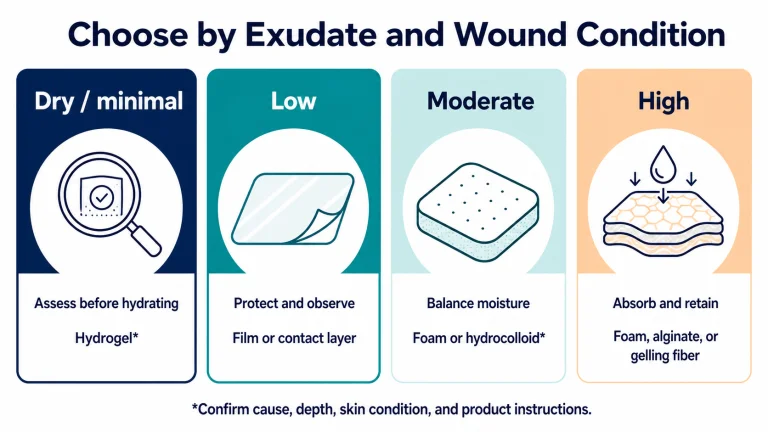
Compare wound dressing types by exudate, depth, wound condition, and skin tolerance, including film, foam, hydrogel, alginate, and contact layers.
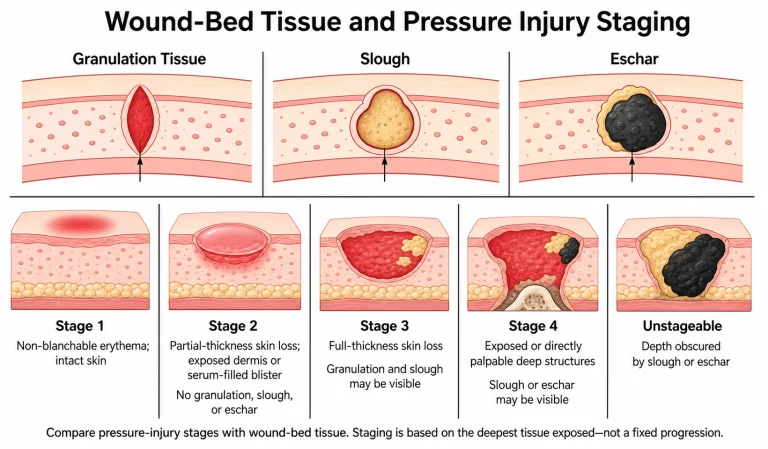
Granulation tissue is the new, vascular tissue that fills an open wound as it heals. Healthy granulation is usually a welcome sign, but color alone cannot tell you whether a wound is progressing normally. Red tissue may be healthy granulation, fragile hypergranulation, inflammation, or another abnormal change; yellow or black tissue may represent slough or…
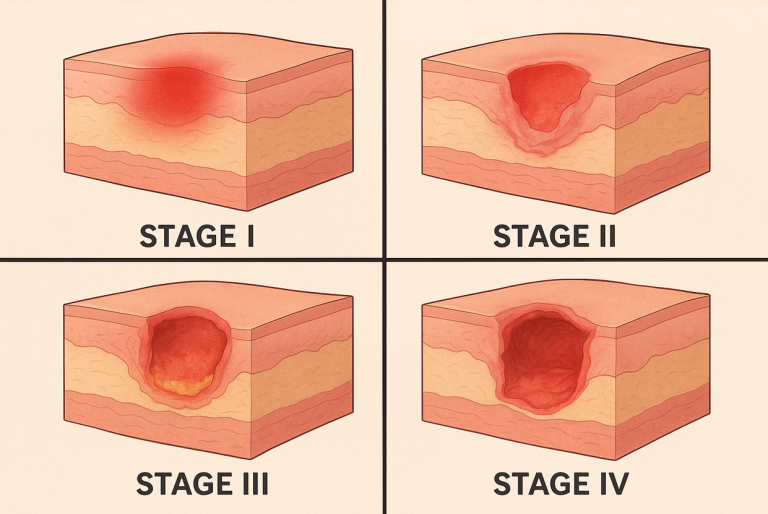
When you or someone you care for develops a pressure ulcer (also called a bedsore or pressure injury), one of the first questions is: how long will it take to heal? There is no single answer. Recovery depends mainly on the stage of the ulcer, but also on the person’s overall health and the quality…
When a loved one is bedridden, uses a wheelchair, or has limited mobility, preventing bedsores is one of the most important things you can do at home. A bedsore (also called a pressure ulcer or pressure injury) can begin to form in as little as 2 hours of unrelieved pressure—and once it opens, it can…
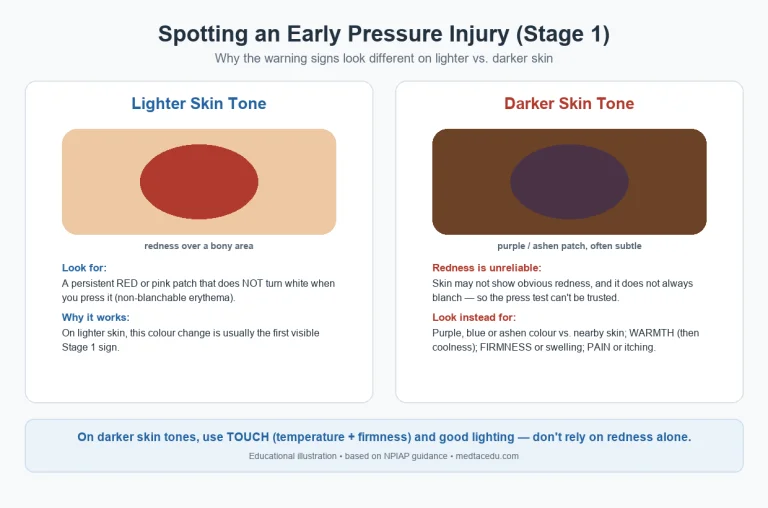
If you care for someone who is bedridden, uses a wheelchair, or has limited mobility, learning to recognize a pressure injury (also called a bedsore or pressure ulcer) early can prevent weeks of pain and serious complications. A pressure injury is not a minor skin problem—once the skin breaks down it can quickly progress to…
Pressure ulcers — also called bedsores or pressure injuries — are localized damage to the skin and underlying tissue caused by sustained pressure over a bony prominence. For clinical staff, the work comes down to three things this guide focuses on: assessing risk, staging accurately, and matching the right treatment to each stage. Getting the…
End of content
End of content
Don't have an account yet? Sign up
No items in your cart. Go on, fill it up with something you love!
Start Shopping Now