When a loved one is bedridden, uses a wheelchair, or has limited mobility, preventing bedsores is one of the most important things you can do at home. A bedsore (also called a pressure ulcer or pressure injury) can begin to form in as little as 2 hours of unrelieved pressure—and once it opens, it can take weeks to months to heal. The good news: with a consistent routine, most pressure ulcers are preventable. This guide walks caregivers through exactly how to prevent bedsores at home.
What Is a Bedsore, and Why Focus on Prevention?
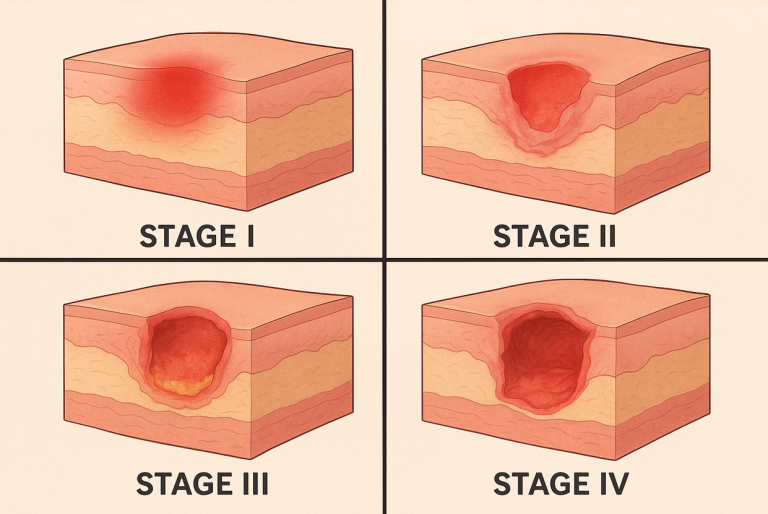
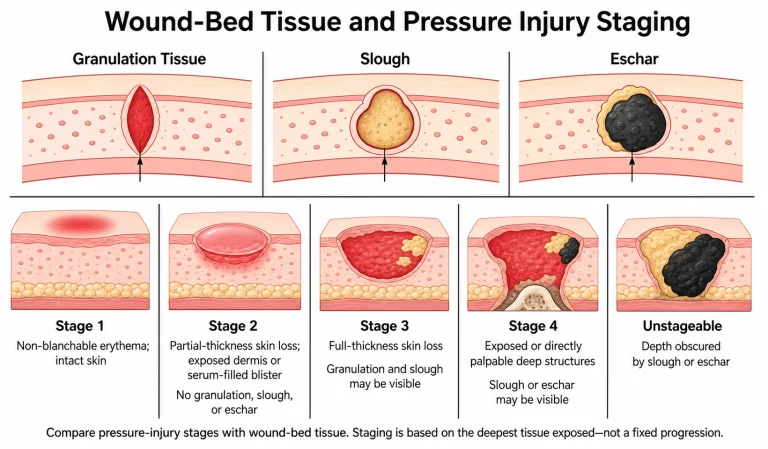
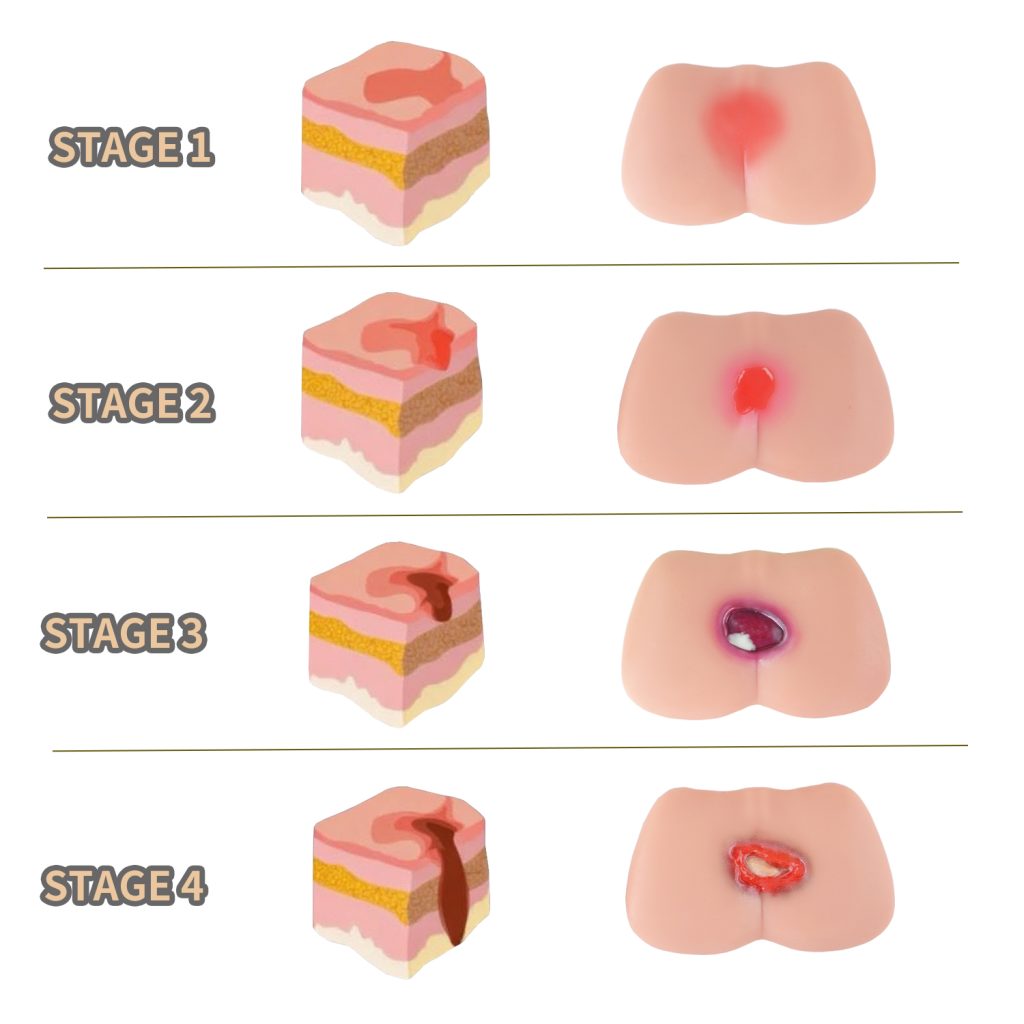
A bedsore is damage to the skin and the tissue underneath, caused by sustained pressure—often combined with friction and shear—that cuts off blood flow over a bony area. The damage ranges from a mild Stage 1 discoloration to a deep open wound that exposes muscle or bone.
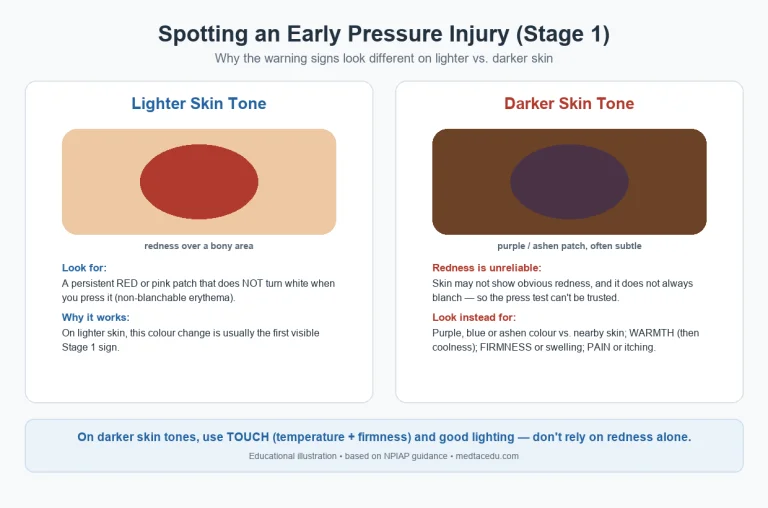
Prevention matters because treatment is hard: a deep Stage 3 or 4 ulcer can take months to over a year to heal and carries a real risk of serious infection. Catching problems early is the next best thing—learn the early warning signs of a pressure injury (including on darker skin)—but stopping one from ever forming is easier, safer, and far less painful for your loved one.
1. Reposition Regularly — The Single Most Important Step
Relieving pressure is the foundation of prevention. The body simply needs blood flow restored to at-risk areas before damage sets in.
For someone in bed:
- Change position at least every 2 hours—even small shifts help. A written schedule or phone alarm keeps the routine consistent.
- Use a 30-degree side-lying position rather than lying directly on the hip bone, and place pillows to separate knees and ankles.
- Lift, don’t drag, when repositioning—dragging creates friction and shear that tear fragile skin. Ask for help to lift safely.
- Keep the head of the bed as low as is safe (ideally under 30 degrees); sitting up too high makes the body slide down, shearing the skin over the tailbone and heels.
- Smooth out wrinkles in sheets to avoid unnecessary friction.
For someone in a chair or wheelchair:
- Shift weight every 15–30 minutes—lean forward or to one side, or do small chair push-ups if able.
- Make sure feet are well supported so weight does not concentrate on the tailbone.
2. Use the Right Support Surfaces
The right equipment spreads pressure out so no single spot bears too much load:
- Pressure-redistributing mattress: a foam or alternating-air mattress designed for pressure relief, for anyone spending long hours in bed.
- Wheelchair cushions: a supportive foam, gel, or air cushion to distribute weight evenly while seated.
- Heel protectors and pillows: “float” the heels off the bed with a pillow under the calves, since heels are extremely vulnerable.
- Avoid ring or “doughnut” cushions—they actually concentrate pressure around the edges and can make things worse.
3. Daily Skin Care and Moisture Management
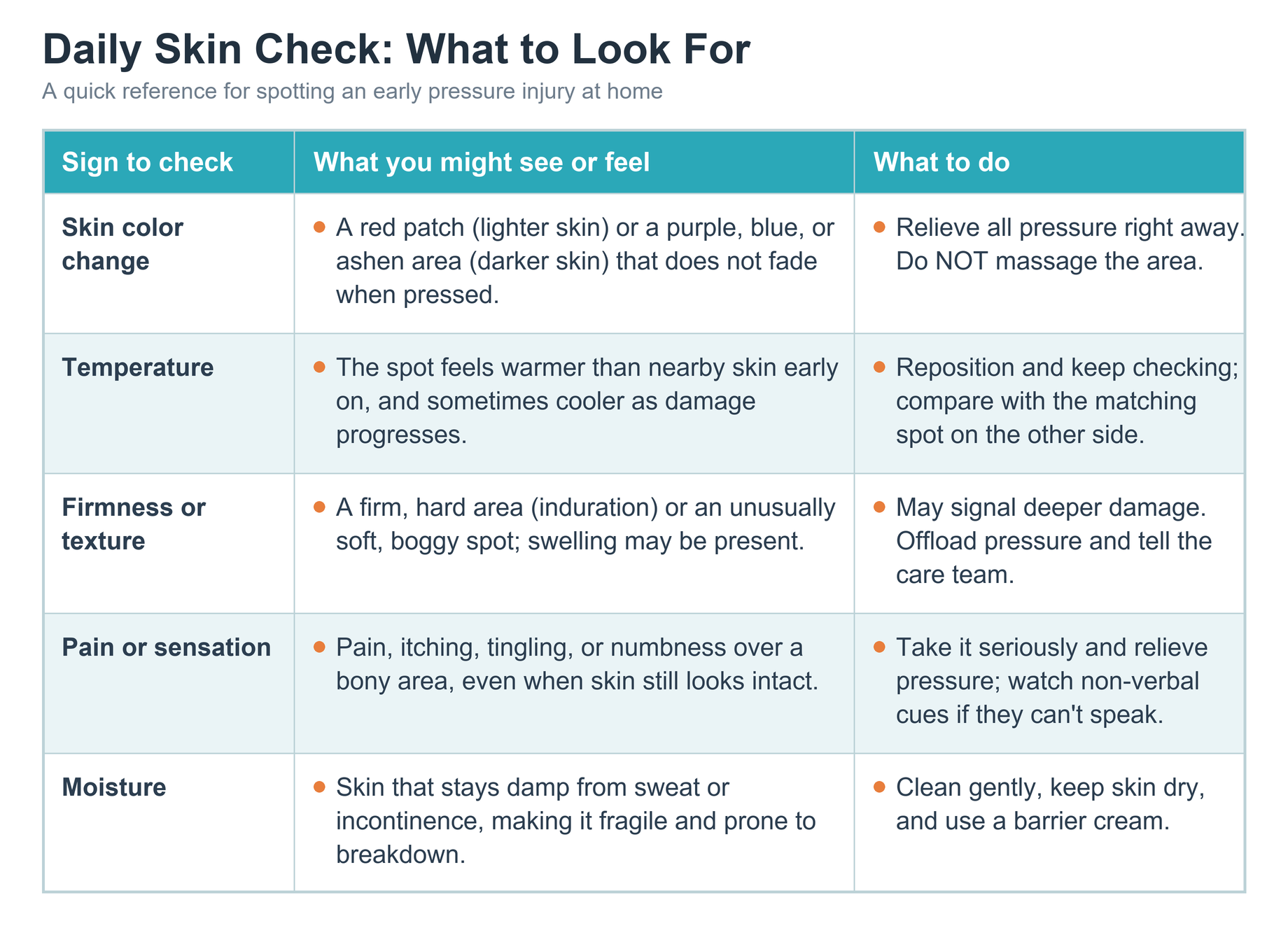
- Inspect the skin every day, paying close attention to bony areas. Look and feel for discoloration, warmth, firmness, or swelling—and on darker skin, rely on temperature and firmness rather than redness.
- Keep skin clean and dry. Moisture from sweat or incontinence makes skin fragile and prone to breakdown.
- Manage incontinence promptly—change quickly, cleanse gently, and use a barrier cream to protect the skin. Ask a nurse for guidance if needed.
- Do not massage reddened skin. Rubbing an area that is already under stress can cause further tissue damage.
4. Nutrition and Hydration
Well-nourished skin is far more resilient, and nutrition is one of the few risk factors you can directly improve:
- Aim for enough protein (meat, eggs, dairy, beans) to keep skin and tissue strong.
- Include vitamin C and zinc (fruits, vegetables, lean meats, seeds), which support skin integrity.
- Encourage adequate fluids daily to keep tissues hydrated, unless a doctor has restricted fluids.
- If appetite or intake is poor, ask a doctor or dietitian about supplements—malnutrition sharply raises bedsore risk.
Who Is at Greater Risk of Bedsores?
Some people need especially close attention. Risk is higher with:
- Long periods of lying in bed or sitting in one position (immobility).
- Skin moisture from sweating or incontinence.
- Reduced sensation or poor circulation (e.g., spinal cord injury, diabetes, vascular disease).
- Malnutrition or dehydration.
- Older age and thin, fragile skin.
- Medical devices that press against the skin (oxygen tubing, casts, catheters).
Which Body Areas Are Most Vulnerable?
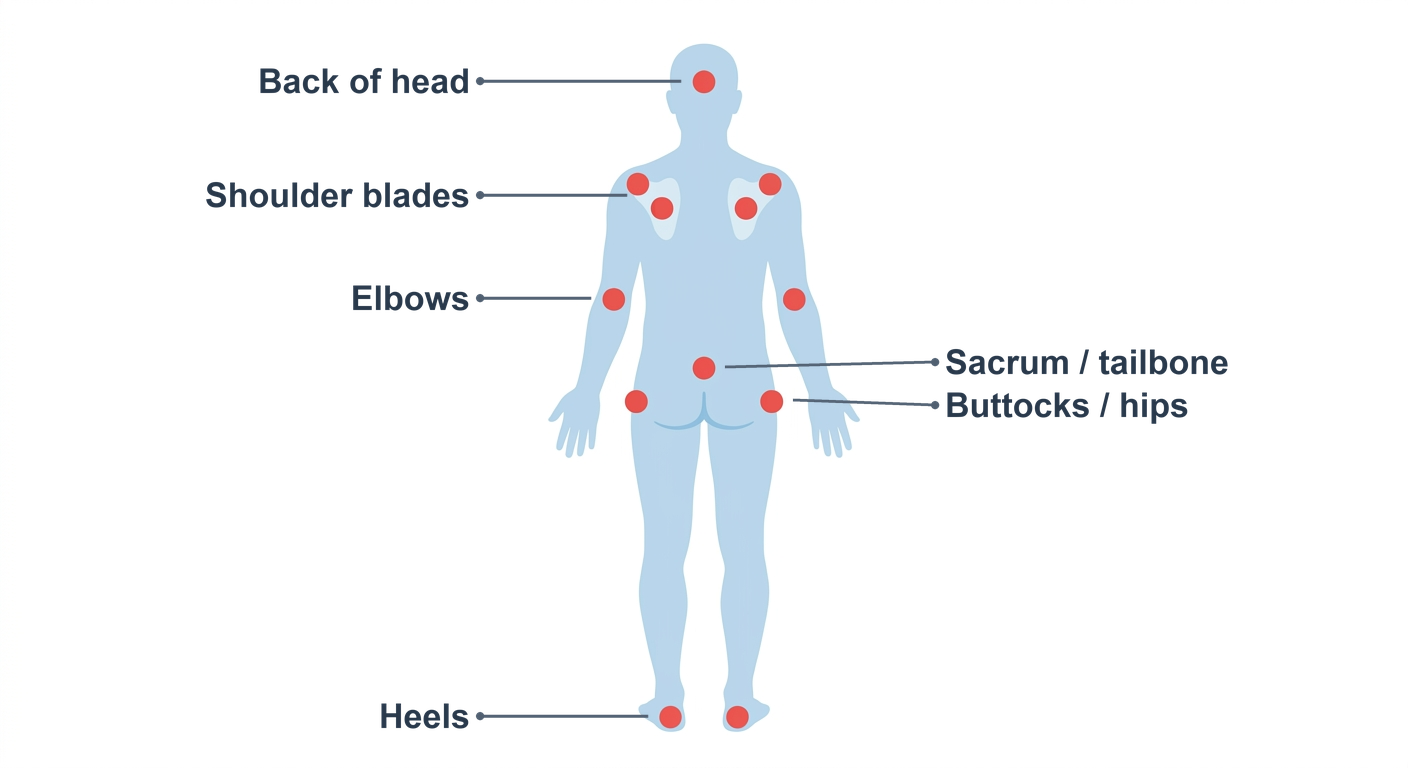
Bedsores form where bone is close to the skin. Check these areas closely every day:
- Heels and ankles
- Hips and buttocks
- Tailbone (sacrum)
- Shoulder blades
- Elbows
- Back of the head
- Knees and ankles, where they press against each other
When to Call a Healthcare Professional
Contact a nurse or doctor promptly if you notice a red or discolored patch that does not fade after relieving pressure, any break in the skin or blister, or signs of infection such as increasing pain, warmth, swelling, odor, or drainage. Early professional input can stop a small problem from becoming a serious wound. A care team—nurses, occupational and physical therapists, doctors, and dietitians—can tailor a prevention plan to your loved one’s needs.
For caregivers and trainees, hands-on practice with a Pressure Ulcer Model 4 Stages Kit makes it easier to understand how pressure damages tissue and to recognize problems early. For patients managing diabetes, pair it with the 5 Stages of Diabetic Foot Ulcer Model Set to address overlapping wound-care risks. See the complete range on our Wound Care, Ulcer & Stoma Models page.
Frequently Asked Questions
How often should I reposition someone to prevent bedsores?
At least every 2 hours for someone in bed, and every 15–30 minutes for someone in a chair or wheelchair. Even small shifts count. The most important thing is consistency—use a written schedule or phone alarm so a turn is never missed, day or night.
What is the best mattress or cushion to prevent pressure ulcers?
For bed, a pressure-redistributing foam or alternating-air mattress is ideal for anyone spending long hours lying down. For seating, a supportive foam, gel, or air cushion spreads weight evenly. Avoid ring or “doughnut” cushions—they concentrate pressure around the edges and can make things worse. A nurse or occupational therapist can help match the surface to the person’s weight and mobility.
Can bedsores be prevented completely?
Most pressure ulcers are preventable with consistent repositioning, good support surfaces, skin care, and nutrition. However, for some very high-risk people—those who are completely immobile or seriously ill—a sore can still develop despite excellent care. That is why daily skin checks and acting on the first warning sign remain essential even with a strong prevention routine.
How do I check for early bedsores on darker skin?
Don’t rely on redness—it is hard to see on darker skin and the press test is unreliable. Instead, use touch to check for warmth (then coolness), firmness, or swelling, and look for areas that appear purple, blue, or ashen compared with nearby skin, using good lighting. See our full guide to spotting early pressure injuries, including on darker skin.
What foods help prevent bedsores?
A diet with enough protein (meat, eggs, dairy, beans), vitamin C and zinc (fruits, vegetables, lean meats, seeds), adequate calories, and plenty of fluids keeps skin strong and resilient. Malnutrition and dehydration are major, reversible risk factors—if appetite or intake is poor, ask a doctor or dietitian about supplements.
Conclusion: Prevention Is Easier Than Treatment
Preventing bedsores at home comes down to a consistent routine: reposition regularly, use the right support surfaces, care for the skin and manage moisture, and support good nutrition and hydration. Combine that with daily skin checks and prompt action on the first warning sign, and you can spare your loved one a great deal of pain—because preventing a pressure ulcer is always easier than healing one.
🩺 Recommended Training Tools
- Pressure Ulcer Model 4 Stages Kit — Four-stage anatomical model to teach caregivers how to identify and prevent pressure ulcers at every severity level.
- 5 Stages of Diabetic Foot Ulcer Model Set — Detailed foot ulcer progression set for training in high-risk wound scenarios.
References & Further Reading
- National Pressure Injury Advisory Panel (NPIAP) (npiap.com)
- Wounds International — A Quick Guide to Pressure Injury Management (woundsinternational.com)
- NurseTogether — Pressure Ulcers Nursing Diagnosis & Care Plan (nursetogether.com)
- Mayo Clinic — Bedsores (Pressure Ulcers) (mayoclinic.org)
Disclaimer: This article is for educational purposes only and is not a substitute for professional medical advice, diagnosis, or treatment. Always consult a qualified healthcare professional. Last updated: June 2026.