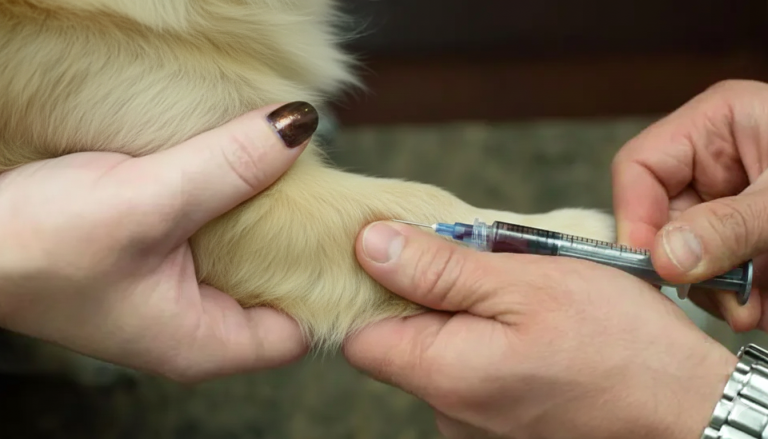
If your veterinarian has recommended giving your dog subcutaneous fluids at home, it can feel intimidating at first — but it is one of the most manageable and rewarding home-care skills an owner can learn. “Sub-Q” or “SC” fluids are a simple way to keep a dog hydrated when illness, kidney disease, or poor appetite makes drinking alone not enough. This guide explains when dogs need subcutaneous fluids, exactly how to set up and give them at home step by step, how to troubleshoot the common problems, how much and how often, and the warning signs that mean it is time to call your vet.
Important: Subcutaneous fluids are always given on a veterinarian’s prescription. Your vet decides the fluid type, the volume, and the schedule based on your dog’s diagnosis. This article teaches the technique — it does not replace that individualized plan.
When Do Dogs Need Subcutaneous Fluids?
Subcutaneous fluids deliver a pool of sterile electrolyte solution into the loose space under the skin, where the body absorbs it gradually over several hours. Vets most often prescribe home Sub-Q fluids for:
- Chronic kidney disease (CKD) — the most common reason; regular fluids help flush toxins and fight the dehydration that failing kidneys cause.
- Ongoing dehydration from chronic vomiting, diarrhea, or a dog that simply will not drink enough.
- Poor appetite during chronic illness, where maintaining hydration supports comfort and recovery.
- Recovery support after certain illnesses or procedures, as directed by your veterinary team.
Subcutaneous fluids are for maintenance hydration. A severely dehydrated, collapsed, or shocky dog needs intravenous (IV) fluids in hospital instead — see our guide to canine IV catheterization.
Subcutaneous vs. Intravenous Fluids: Quick Comparison
| Subcutaneous (SC) fluids | Intravenous (IV) fluids | |
|---|---|---|
| Where it goes | Pool under the skin, absorbed slowly | Directly into a vein, immediate |
| Best for | Maintenance hydration, chronic disease | Severe dehydration, shock, emergencies |
| Where it is done | At home by the owner | In hospital by the veterinary team |
| Speed of effect | Gradual (hours) | Rapid |
| Volume per session | A set amount your vet prescribes | Continuous, closely monitored |
Note: subcutaneous fluids for hydration are different from a small subcutaneous injection of medication (like insulin). For the technique of giving medication shots, see our guide to dog subcutaneous and intramuscular injections.
What You’ll Need
- The prescribed fluid bag — usually an isotonic crystalloid such as Lactated Ringer’s Solution (LRS), provided by your vet.
- A fluid (drip) line set with a roller clamp and a drip chamber.
- New sterile needles — typically 18–20 gauge. A wider (lower-number) gauge flows faster; a thinner one is gentler but slower. Use a fresh needle every time.
- A hook or hanger to suspend the bag about three feet above the dog’s back so gravity drives the flow.
- A permanent marker to mark the “stop” line on the bag, gauze or paper towel for the site, a sharps container, and plenty of treats.
How to Give Subcutaneous Fluids to a Dog at Home: Step by Step
The process has two parts: setting up the fluid line once, then giving the fluids. Take your time the first few sessions — it gets quick and routine fast.
Part 1 — Set up the fluid line
- Warm the bag to body temperature by resting the sealed bag in a bowl of warm water for 5–10 minutes. Never microwave fluids — they can heat unevenly and burn your dog.
- Close the roller clamp on the line completely (slide the wheel until the tubing is pinched shut).
- Spike the bag. Pull the tab off the bag’s port, uncap the pointed plastic spike on the line (don’t touch the tip), and push it firmly into the port with a twisting motion.
- Hang the bag about three feet above where your dog will sit.
- Mark your stop point. Find the volume markings on the bag and draw a line with a marker at your vet’s prescribed amount, so you know exactly when to stop.
- Fill the drip chamber. Squeeze the clear chamber below the bag until it is about half full of fluid.
- Prime the line. Open the roller clamp and let fluid run all the way through until it drips out the end (this clears every air bubble), then close the clamp.
- Attach a fresh needle firmly to the end of the line, keeping the hub and needle clean.
Part 2 — Give the fluids
- Settle your dog somewhere comfortable — small dogs on a table or lap, large dogs sitting or lying on the floor. A lick mat with peanut butter at nose height is the classic distraction.
- Find the site. Use the loose skin between the shoulder blades (the main site) or over a hip. Rotate the spot each session.
- Tent the skin. Pinch and lift a generous fold of loose skin into a triangular “tent.” Gently rubbing or wiggling the skin first helps distract your dog.
- Insert the needle into the base of the tent at a 30–45° angle, sliding the full length under the skin in one firm, steady motion. Then release the skin.
- Open the roller clamp fully and watch the drip chamber — you should see fluid flowing. Keep one hand on the needle at all times.
- Stay calm and praise your dog while the fluid runs in. Higher bag = faster flow.
- Watch your marker line. When the fluid reaches it, close the roller clamp.
- Remove the needle straight back out, then press the site with gauze for about 30 seconds. A little clear fluid or a drop of blood is normal.
- Recap carefully and reward. Recapping is the moment owners most often poke themselves, so go slowly. Replace the used needle with a fresh one for next time, and store the bag at room temperature.
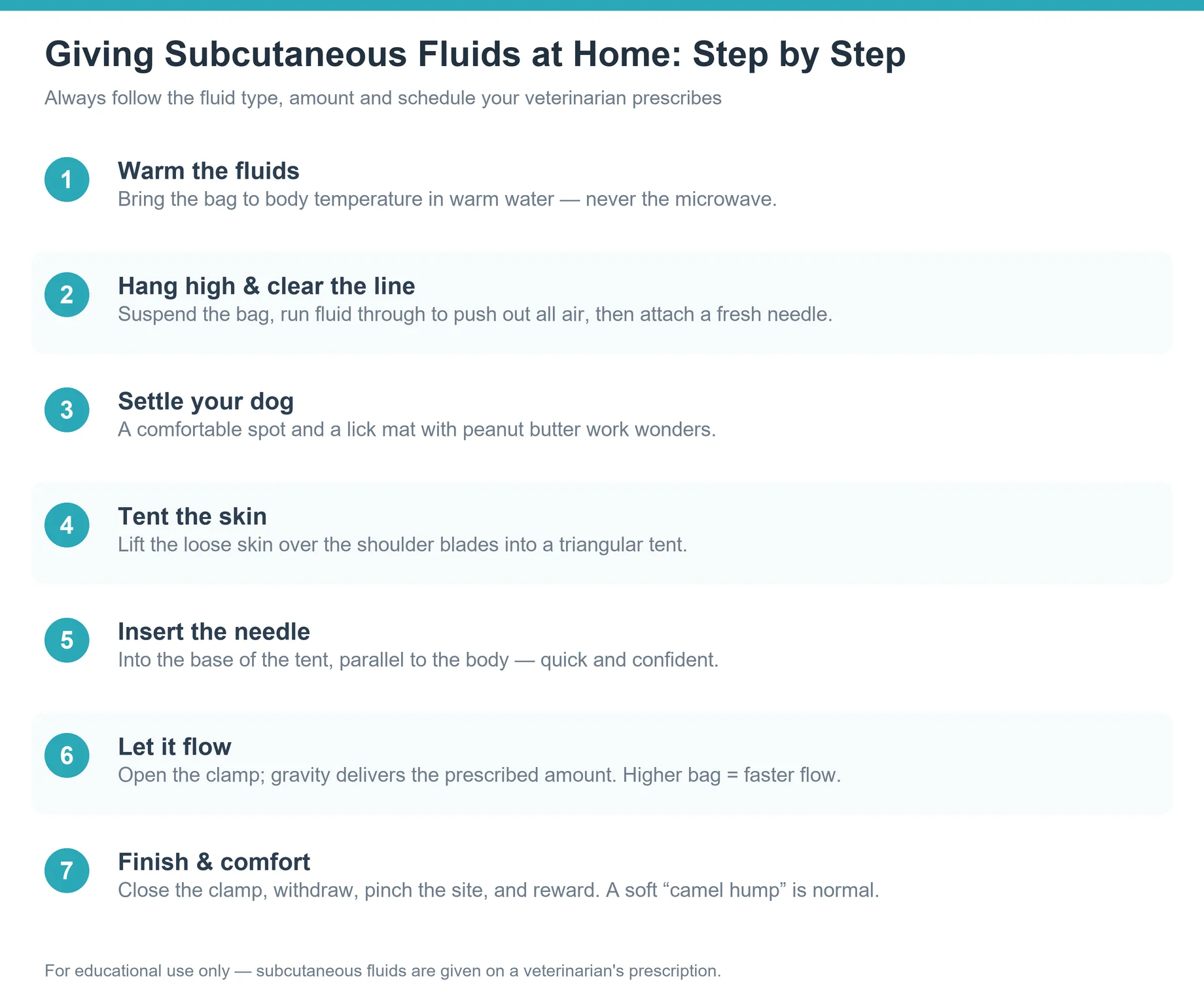
Afterward you will feel a soft “camel hump” of fluid under the skin. This is completely normal — gravity moves it down along the chest, belly, or a front leg, and it is usually absorbed within 4–6 hours. Tip: if your dog seems sore, gently massaging the hump or applying a towel-wrapped cool pack for a couple of minutes can help.
Troubleshooting: Common Problems and Quick Fixes
- Fluid is flowing too slowly: make sure the roller clamp is fully open, raise the bag higher, or gently adjust the needle angle under the skin without pulling it out. A wider-gauge needle also flows faster.
- Fluid is leaking down your dog’s side: the needle has likely passed through the far side of the skin. Withdraw it slightly to reposition under the skin, or stop and restart in a fresh spot.
- Your dog won’t sit still: movement slows the flow and adds discomfort. Improve the distraction (peanut butter, treats), ask a helper to hug your dog gently, or try a thinner needle. Some dogs simply do better with in-clinic fluids — that’s okay.
- The lump hasn’t gone down before the next dose: don’t add more fluid on top — call your vet first.
- Hard to make a “tent” (thin or elderly dogs): tight skin can make the needle slip back out of the subcutaneous space. Alternate sites and ask your vet to demonstrate; some dogs are better candidates for in-clinic administration.
- The bag was dropped or the line came apart: discard it. Once sterility is compromised, the infection risk isn’t worth reusing it.
How Much and How Often?
Only your veterinarian sets the volume and schedule — it depends on your dog’s weight, diagnosis, and bloodwork. Some dogs receive fluids daily, others every two to three days. Never increase the amount on your own: too much fluid can overload the heart and lungs, which is especially risky for dogs with heart disease. If you are ever unsure how much to give, call your vet before starting the session.
Warning Signs: When to Call Your Vet
Stop and contact your veterinarian if you notice:
- The fluid lump has not been absorbed after 12–24 hours, or keeps building up session to session.
- Difficulty breathing, coughing, or distress during or after fluids — stop immediately and call your vet.
- Redness, heat, pain, swelling, or discharge at the insertion site (possible infection or abscess).
- Your dog becomes weak, stops urinating, or seems markedly worse — seek care promptly.
Frequently Asked Questions (FAQ)
Does giving subcutaneous fluids hurt my dog?
Most dogs tolerate it very well. There is a brief pinch as the needle goes in, but the subcutaneous space is not very sensitive. Warming the fluid to body temperature and using a fresh, sharp needle make it noticeably more comfortable.
Is it normal for my dog to pee more after subcutaneous fluids?
Yes — urinating more is usually a good sign that the fluids are rehydrating your dog and helping the kidneys flush waste. Make sure your dog has easy access to a potty break afterward.
Will my dog still drink water normally afterward?
Your dog may drink a little less right after a session because they feel more hydrated, which is fine. Always keep fresh water available. If your dog refuses water for an extended period, call your vet.
Will my dog be tired or restless after fluids?
Some dogs rest quietly afterward, which is normal. Others may pace a little. If your dog seems unusually lethargic, painful, or restless after several sessions, mention it to your vet — it can signal the fluids need adjusting or there is discomfort to address.
How long does the fluid “lump” take to go away?
It usually shifts and absorbs within 4–6 hours, sometimes sliding down to the chest, belly, or a leg by gravity — all normal. If a lump is still there before the next dose is due, call your vet before giving more.
Can I warm the fluids first, and how?
Yes, and it helps a lot. Rest the sealed bag in warm water for 5–10 minutes until it feels body-temperature. Never use the microwave — it heats unevenly and can burn your dog.
What are the side effects of subcutaneous fluids?
Side effects are usually minor: a temporary lump, mild soreness like after a vaccine, or a small bruise. Serious problems — trouble breathing, a site infection, or signs of fluid overload — are uncommon but need prompt veterinary attention.
Can I reuse the needle or the fluid bag?
Use a new sterile needle every session — a reused needle is dull and raises infection risk. The fluid bag can be stored at room temperature between doses, but discard it if it is dropped, contaminated, or past its expiry.
Sources
- VCA Animal Hospitals — Subcutaneous Fluid Administration in Dogs
- International Renal Interest Society (IRIS) — Treatment recommendations for canine CKD
- Today’s Veterinary Practice — Fluid therapy in small animals
- MSD / Merck Veterinary Manual — Fluid Therapy in Animals
- https://toegrips.com/subcutaneous-fluids-for-dogs/
Veterinary disclaimer: This article is for educational purposes only and does not replace professional veterinary advice. Subcutaneous fluids should only be given on a veterinarian’s prescription, using the fluid type, volume, and schedule they specify for your individual dog.
🩺 For Veterinary Students & Teams
Learning fluid and injection technique is far less stressful on a model first. Our Dog IV Practice Kit and Canine IV Training Model let students build the muscle memory for needle handling, IV catheter placement, and fluid setup before working with live patients.