For severe external bleeding, make sure the scene is safe, call emergency services, find the source, and apply steady, firm direct pressure. If life-threatening bleeding is from an arm or leg and is not controlled by pressure—or pressure cannot be maintained—use a commercial tourniquet if available and you are trained. For an appropriate deep wound where a limb tourniquet cannot work, a trained responder may pack the wound and maintain pressure. The target is not a fixed pressure number: keep effective pressure on the source and confirm that bleeding stops. This article is an educational framework, not a substitute for certified first-aid or trauma training.
You see blood spreading across a sleeve. Someone shouts, “Get a tourniquet!” It sounds decisive—but is it the right move?
The most common bleeding-control mistake is not doing nothing. It is using the right tool in the wrong place. A tourniquet can save a life when severe bleeding comes from an arm or leg. It is not the answer for every wound. In other locations, direct pressure or wound packing may be the safer choice.
The decision becomes much easier when you ask two questions in order:
- Is the bleeding life-threatening?
- Where is the wound, and what shape is it?
First, Is the Bleeding Life-Threatening?
Not every cut needs a tourniquet or wound packing. Start by looking at the bleeding and the person, not just at the size of the skin opening.
Warning signs of life-threatening external bleeding include:
- blood flowing continuously or spurting;
- blood pooling on the ground or rapidly soaking clothing or dressings;
- part or all of an arm or leg being traumatically amputated; and
- signs of shock, such as pale, cool or clammy skin, weakness, confusion, dizziness, or reduced responsiveness.
Call your local emergency number immediately when these signs are present. Put on gloves if they are available, but do not delay lifesaving care when bleeding is critical. Keep watching the person’s breathing and responsiveness while help is coming.
Small cuts and slow oozing usually respond to basic first aid. The pressure–packing–tourniquet decision is for serious external bleeding, especially when blood loss is continuing.
Second, Where Is the Wound?
The first question tells you how urgently the bleeding must be controlled. It does not, by itself, tell you which method fits. For that, expose the injury enough to find the bleeding source, then look at both its location and shape.
Think of direct pressure, wound packing, and a tourniquet as three methods matched to different wounds—not as three levels on a ladder:
- Direct pressure fits an external wound that you can reach and compress directly.
- Wound packing fits a deep, narrow wound—especially at a junction such as the groin or armpit—where pressure must reach the bleeding source and a limb tourniquet cannot be placed.
- A tourniquet fits life-threatening bleeding from an arm or leg, where the device can circle the limb above the wound.
This location-and-shape check explains why a method that is correct for one severe wound can be wrong for another.
Why People Choose the Wrong Method
In a calm classroom, matching method to wound can look straightforward. In a real emergency, blood may hide the wound, clothing may cover the injury, and several people may give conflicting advice. Three mental shortcuts cause many errors.
Mistake 1: “A Lot of Blood Always Means Tourniquet”
A tourniquet works by tightly compressing an arm or leg to stop blood flow beyond the device. That makes it powerful—but location-specific. It cannot control bleeding from the neck, torso, armpit, shoulder, or groin simply because there is no safe section of limb above those wounds where a standard extremity tourniquet can work.
Mistake 2: “Direct Pressure Is Only for Minor Cuts”
Direct pressure is a first-line action for severe external bleeding. It places force directly over the bleeding source and can be started immediately while someone calls emergency services or retrieves equipment. The important words are firm, steady, and continuous. Repeatedly lifting the dressing to look underneath interrupts pressure.
Mistake 3: “If I Own a Tourniquet, I Know How to Use It”
Equipment is not the same as skill. For effective arterial bleeding control, a tourniquet must be tightened enough to stop the flow. A loose device may fail to stop arterial flow while still restricting venous return, and one placed over a joint may not compress effectively. Hands-on instruction lets learners practice positioning, tightening, checking whether bleeding has stopped, and responding when the first attempt fails.
Direct Pressure, Wound Packing, or Tourniquet?
Think of the three methods as different answers to different wound shapes and locations.
| Method | Best fit | Key limitation |
|---|---|---|
| Direct pressure | Most accessible external wounds; the immediate first action while help or equipment is coming | Requires steady force directly over the source and continued reassessment |
| Wound packing plus pressure | A deep, open wound that can hold packing, especially at a junction such as the shoulder/armpit or groin; use only when trained | Not for blindly pushing material into the chest or abdomen, and not for minor or shallow wounds |
| Commercial limb tourniquet | Life-threatening bleeding from an arm or leg | Not for the neck or torso, not over a joint, and not directly over the wound |
These methods are not rivals. A responder may begin with direct pressure, then use a tourniquet for life-threatening limb bleeding. A trained responder may pack a deep junctional wound because a standard limb tourniquet cannot sit above it. The goal is not to use the most dramatic tool; it is to match the tool to the anatomy.
When Direct Pressure Is the Right First Move
Direct pressure is useful when the bleeding source can be reached. Place a dressing or clean cloth over the wound and press firmly with your hands. If a hemostatic dressing is available and you have been trained to use it, follow its instructions.
Continue pressure until:
- the bleeding stops;
- an effective tourniquet has stopped life-threatening arm or leg bleeding;
- another responder takes over;
- you are physically unable to continue; or
- the scene becomes unsafe.
If an object is embedded in the wound, do not pull it out. Apply pressure around it and follow emergency-dispatch instructions. Removing it can make bleeding worse.
Direct pressure is not “waiting to see what happens.” It is active bleeding control. What matters is whether the blood flow slows and stops—not whether a bandage looks neat.
How Much Pressure Should You Apply?
First-aid guidance does not give the public one universal pressure value in pounds, kilograms, or millimeters of mercury. Wound depth, location, body size, the surface under the injury, and the device or dressing all change how much force reaches the bleeding source. A number that is too low may fail, while chasing a high number can distract from the result.
Use steady, firm manual pressure directly over the source and keep checking the outcome: life-threatening bleeding should stop. Do not repeatedly lift the dressing to look underneath. If severe limb bleeding continues despite effective pressure, or pressure cannot be maintained, a commercial tourniquet may be required. Tighten it according to your training and the device instructions until bleeding stops; do not use pain or a preset number as the endpoint.
When Wound Packing Makes Sense
Wound packing fills a deep wound cavity so pressure reaches the bleeding source. It is most relevant when a wound is deep enough to accept gauze and a standard limb tourniquet cannot be used effectively—for example, a severe junctional wound near the shoulder/armpit or groin.
Packing should be learned in a recognized bleeding-control or first-aid course. The responder must be able to identify the wound cavity, place gauze where pressure is needed, fill the space, and maintain firm pressure afterward. Merely laying gauze on top of a deep wound is not the same as packing it.
Do not improvise by blindly stuffing material into the chest or abdomen. Do not pack a minor, shallow wound. Follow the scope of your training, local emergency guidance, and the instructions for any hemostatic gauze being used.
When a Tourniquet Is the Right Choice
A commercial tourniquet is intended for life-threatening external bleeding from an arm or leg. It may be needed when blood is flowing or spurting heavily, direct pressure cannot be maintained or is not controlling the bleeding, the limb is trapped, there are multiple casualties, or the scene requires rapid movement.
Where to Place a Tourniquet on an Arm
When the wound can be seen, place the tourniquet:
- on the injured arm, between the wound and the torso;
- about 2–3 inches (5–7.5 cm) above the wound;
- directly on the limb rather than over bulky clothing when possible; and
- away from the elbow or another joint.
Do not place it directly over the wound. If the ideal position would land on the elbow, move the tourniquet above the joint toward the torso. Follow the device manufacturer’s instructions and your course protocol.
This means a tourniquet may be appropriate for catastrophic bleeding from the forearm or upper arm when there is enough limb above the wound. It is not appropriate for a shoulder or armpit wound where the injury is too close to the torso. That is a junctional area, where trained wound packing and firm pressure may be used while emergency care is activated.
How Do You Know It Is Working?
The result is more important than the appearance. An effective tourniquet stops life-threatening bleeding. Tightening is painful, but pain alone is not a reason to loosen it. If the bleeding has not stopped after the first commercial tourniquet has been tightened fully, trained responders may place a second one above and next to the first, closer to the torso.
Once applied, do not loosen or remove a tourniquet yourself. Record the application time if possible and leave removal to medical professionals.
Places a Standard Limb Tourniquet Does Not Belong
A standard extremity tourniquet should not be placed:
- around the neck;
- around the chest or abdomen;
- over the shoulder/armpit or groin junction;
- directly over a wound;
- over the elbow, knee, wrist, ankle, or another joint; or
- on a minor wound that can be controlled with simpler first aid.
Severe bleeding from the neck, chest, abdomen, back, shoulder, or groin is still an emergency. Call emergency services, apply direct pressure when appropriate, and use wound packing only for locations and situations covered by your training. Do not wrap a tourniquet around the torso or neck.
What If There Is Also a Chest Injury or Breathing Problem?
Major external bleeding and abnormal breathing are both immediate threats. Activate emergency services early—use speakerphone if possible—control life-threatening visible bleeding, and keep reassessing responsiveness and breathing while help is coming. A second responder can work on bleeding control while another follows the emergency dispatcher’s airway, breathing, CPR, or AED instructions.
An open chest wound is a separate emergency, not a wound-packing scenario. Do not push gauze into the chest and do not wrap a limb tourniquet around the torso. Current first-aid guidance allows leaving an open chest wound exposed to air, placing a clean nonocclusive dry dressing, or using a purpose-made vented chest seal when appropriate and within training. If a dressing is used, watch for worsening breathing and loosen or remove it if breathing becomes worse.
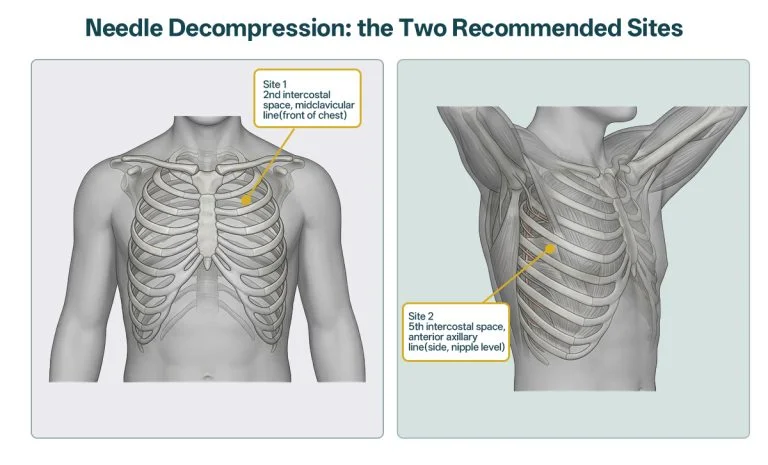
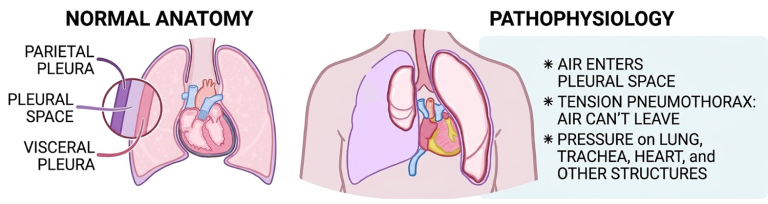
Do not try to diagnose or treat a tension pneumothorax with invasive procedures unless that is within your professional scope and current protocol. For a lay responder, the priorities are rapid EMS activation, care within training, control of accessible life-threatening external bleeding, and continuous monitoring for changes.
A Simple Location Check for an Injured Arm
Imagine three injuries:
- A shallow palm cut that is oozing: start with direct pressure. A tourniquet is usually unnecessary.
- A deep forearm wound with life-threatening bleeding: apply a commercial tourniquet above the wound on the arm if trained, avoiding the elbow, and tighten until bleeding stops.
- A deep wound at the shoulder/armpit: a standard arm tourniquet cannot sit between the wound and the torso. Trained packing with firm pressure may be appropriate while emergency services respond.
The same arm can therefore require three different choices. The deciding factors are not fear or the amount of equipment nearby; they are bleeding severity, wound depth, and whether there is a safe tourniquet position above the injury.
What to Do After the Bleeding Slows or Stops
Stopping visible blood flow is not the end of care. Continue to:
- monitor breathing and responsiveness;
- watch for renewed bleeding;
- keep the person from becoming too cold or overheated;
- keep an applied tourniquet visible and in place;
- tell emergency personnel what happened, what method was used, and when a tourniquet was applied; and
- stay with the person until professional help takes over, if the scene remains safe.
Do not give food or drink to a seriously injured person unless emergency professionals tell you to do so. Do not delay transport to clean a severe wound.
Why Reading Is Not Enough
The rules sound simple on a page. Under stress, learners often miss the true bleeding source, choose a device before checking the wound location, place a tourniquet too close to a joint, or stop tightening before blood flow stops.
That is why ACS Stop the Bleed courses combine a presentation with hands-on practice. An instructor can see whether pressure reaches the wound, whether packing fills the cavity, and whether a tourniquet actually controls simulated bleeding. The next article in this series will turn these decisions into a complete bleeding-control training checklist—from scene assessment to final reassessment and handoff.
Conclusion
The best bleeding-control method is the one that fits both the severity and the location of the wound. Start with scene safety, emergency activation, and direct pressure. Use a commercial tourniquet for life-threatening arm or leg bleeding when trained, placing it above the wound and never over a joint. Use wound packing for an appropriate deep wound when a tourniquet cannot work and your training covers the technique.
The memorable question is not “Where is the tourniquet?” It is: “Where is the bleeding, and which method can put effective pressure on that source?”
Frequently Asked Questions
Should I use a belt as an improvised tourniquet?
A purpose-designed commercial tourniquet is preferred because improvised devices may be difficult to tighten enough to stop arterial bleeding. People sometimes search for “how to tie a tourniquet,” but a commercial tourniquet is applied, tightened, and secured according to its design—it is not simply tied like a belt. Use the equipment and techniques covered by your training, continue direct pressure when appropriate, and follow emergency-dispatch instructions.
Can I put a tourniquet below the wound?
No. A tourniquet must be between the wound and the heart so it can reduce blood flow reaching the injury. For a visible wound, recognized first-aid guidance commonly places it 2–3 inches above the wound, never over the wound or a joint. Follow the instructions for the specific device and your training protocol.
Arterial vs. venous bleeding: do I need to tell the difference?
No. For first-aid decisions, you do not need to distinguish arterial blood from venous blood before acting. Do not delay care while trying to label the vessel. Judge whether the external bleeding is life-threatening, find its source, call emergency services, and choose the method based on severity and location. The practical goal is controlling bleeding and monitoring the person’s condition.
Sources
- American College of Surgeons, ACS Stop the Bleed. Stop the Bleed Resources for Journalists.
- American College of Surgeons, ACS Stop the Bleed. Frequently Asked Questions.
- American Red Cross. Bleeding (Life-Threatening External).
- American Red Cross. How to Apply a Tourniquet.
- American Heart Association and American Red Cross. 2024 Guidelines for First Aid.
- American College of Surgeons and Association for Surgical Education. Medical Student Core Curriculum: Trauma II—Diagnosis and Management.
Medical disclaimer: This article is for general education and does not replace certified first-aid training, emergency-dispatch instructions, local protocols, or professional medical care. Severe or uncontrolled bleeding is a medical emergency. Make sure the scene is safe, call your local emergency number, and act within the scope of your training.
Training Resources
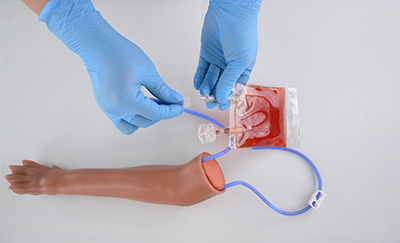
Hemorrhage control kits can put tourniquets, gauze, and dressings within reach, but equipment alone does not teach method selection. Once learners know which method fits the wound, they need practice deciding and acting under realistic conditions. MEDTACEDU’s Hemorrhage Control Arm Simulator with Electric Pump provides a life-size arm with multiple wound types, controllable simulated bleeding, and feedback when effective pressure or tourniquet application stops the flow. In instructor-led sessions, it can support repeated practice of direct pressure, wound packing, tourniquet placement, reassessment, and method selection without placing a patient at risk.