Students often mix up fetal lie, presentation, and position, then struggle to read an abbreviation like LOA or ROP. This guide separates the terms, explains how each common position and presentation can change the course of labor, and shows how to demonstrate each one with a fetal doll and pelvis.
Three terms describe where the baby is at the start of labor. Lie is the direction of the baby’s spine compared with the mother’s spine. Presentation is the part of the baby that enters the pelvis first. Position is which way that leading part faces inside the pelvis. In most births the lie is longitudinal, the presentation is vertex (head first, chin tucked), and the position is occiput anterior. Each section below covers one departure from that pattern and what it means for labor.
Lie, Presentation, and Position: Three Different Questions
Each term answers a different question, and students who keep the questions apart rarely confuse the terms.
| Term | Question it answers | Common answers |
|---|---|---|
| Lie | Is the baby’s spine parallel to the mother’s spine? | Longitudinal, transverse, oblique |
| Presentation | Which part of the baby enters the pelvis first? | Vertex, face, brow, breech, shoulder, compound |
| Position | Which way does that part face in the pelvis? | Occiput anterior, occiput transverse, occiput posterior |
The terms build on each other. Only a longitudinal lie allows a head-first or breech presentation. A transverse or oblique lie usually brings a shoulder to the inlet instead. Position is then described for whatever part is presenting.
On the model: Hold the doll against the pelvis three ways: lengthwise head down, lengthwise bottom down, and crosswise. Ask students to name the lie for each, then the presentation. Leave position for later, once the doll is inside the pelvis.
How to Read LOA, ROA, and Other Position Abbreviations
A position abbreviation has three parts:
- Side of the mother’s pelvis: L (left) or R (right).
- Reference point on the baby: O for occiput (the back of the head) in a vertex presentation, or M for mentum (the chin) in a face presentation.
- Front, side, or back of the pelvis: A (anterior, toward the pubic bone), T (transverse, toward the side), or P (posterior, toward the mother’s spine).
So LOA (left occiput anterior) means the back of the baby’s head is toward the front of the mother’s pelvis, on her left side. ROA is the same position on her right side. In both, the baby faces the mother’s back. Occiput anterior is the most common position, and it is the one the normal mechanism of labor is built around.
To picture these positions, imagine standing at the foot of the bed and looking up at the mother as she lies on her back. Her pubic bone is at the top of your view, her spine is at the bottom, and her left side is on your right. Figure 1 uses this view.
The vertex positions form a ring of eight. Occiput anterior (OA) points straight to the front and occiput posterior (OP) straight to the back. Between them are LOA, LOT, and LOP on the mother’s left, and ROA, ROT, and ROP on her right. Because the reference point changes with the presentation, a face presentation is written with M instead of O, such as LMA (left mentum anterior).
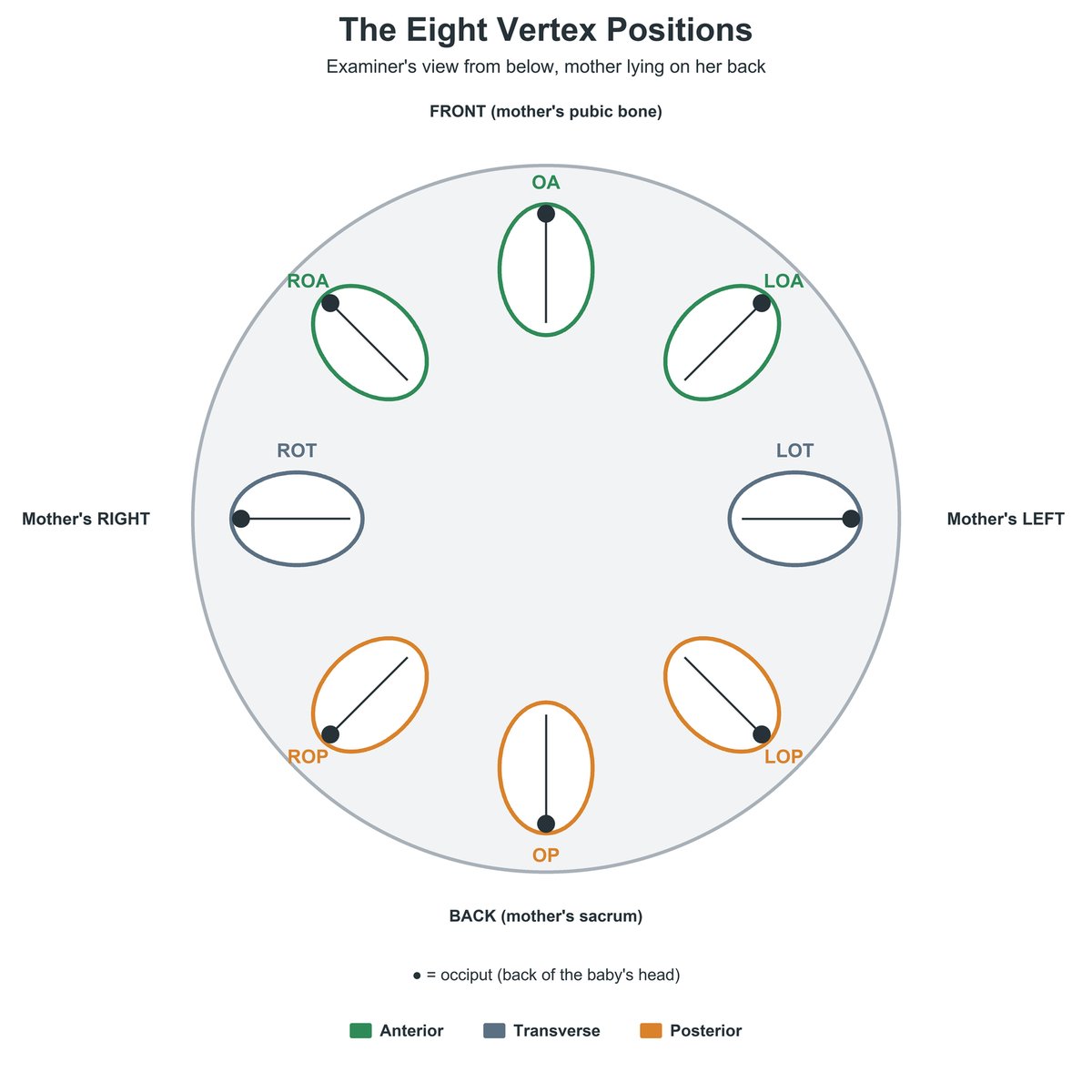
Figure 1. The eight vertex positions, seen from below with the mother lying on her back.
On the model: Mark the occiput on the doll with a small sticker. Students then place the head in each of the eight positions and say the abbreviation out loud. A sticker turns an abstract code into something they can point to.
Occiput Transverse and Occiput Posterior
The head usually enters the pelvic inlet in a transverse position, facing one of the mother’s sides. So LOT or ROT early in labor is expected. Figure 1 shows where each of these positions sits. The head then normally rotates to occiput anterior during internal rotation. Problems start when that rotation does not happen or goes the other way.
Persistent occiput transverse means the head stays sideways instead of completing its turn. It counts as a malposition because the head is not lined up with the roomiest diameter of the lower pelvis.
Occiput posterior (OP) means the occiput points toward the mother’s spine, so the baby faces her front. It is the most common malposition. OP is common early in labor, and most of these babies still rotate to OA: one clinical review estimates about 30% in the first stage but only 5% to 7% at delivery. When OP persists, the neck is usually less flexed. A wider part of the head then has to pass through the pelvis, so labor can be slower, and progress may stop in the second stage. Assisted vaginal delivery or cesarean delivery is often needed.
On the model: Start with the head sideways at the inlet (OT), then turn it to OA, and finally to OP. Tuck the chin fully in OA, then let it lift slightly in OP. Students can see why the posterior head presents a broader surface, even though the baby is the same size.
Face and Brow Presentations
In a vertex presentation the chin is tucked to the chest. In face and brow presentations the neck is extended instead, so a larger diameter of the head leads.
- Face presentation: The neck is fully extended and the chin (mentum) leads. It is rare, at about 1 in 600 deliveries. What matters most is where the chin points. With the chin toward the front (mentum anterior), vaginal birth may be possible. With the chin toward the back (mentum posterior), the neck is already fully extended and too short to follow the curve of the sacrum, so a cesarean delivery is usually needed.
- Brow presentation: The neck is only partly extended, and the area between the anterior fontanelle and the eye ridges leads. This presents the widest diameter of the head, about 13.5 cm, compared with about 9.5 cm for a well-flexed vertex. A brow presentation usually changes to a vertex or face presentation on its own. If it persists, the head generally cannot engage, and cesarean delivery is required.
On the model: Place the doll in vertex, brow, and face presentations in sequence, extending the neck a little more each time. Measure across the leading part of the head at each step. The brow diameter is the largest, which explains why it is the one that stops labor.
Breech, Transverse Lie, and Compound Presentation
Breech presentation means the buttocks or feet lead instead of the head. The three types are frank breech (hips flexed, knees straight), complete breech (hips and knees flexed, as if sitting), and footling breech (one or both feet first). The main concern is that the buttocks or feet are narrower than the head that follows, so they do not open the cervix as fully. The largest part of the baby then comes last. When breech is found near term, a clinician may try to turn the baby from outside the abdomen before labor, a procedure called external cephalic version. If the baby stays breech, cesarean delivery is usually planned.
Transverse or oblique lie means the baby lies across the uterus rather than lengthwise. A shoulder often sits over the inlet (shoulder presentation), and this cannot be delivered vaginally. Cesarean delivery is needed.
Compound presentation means more than one part presents at the same time, such as a hand or arm alongside the head. It shows students that a “head-first” baby is not always a simple vertex birth.
On the model: For breech, show the three leg arrangements one after another. For compound presentation, bring one hand up beside the head at the inlet. Ask students to give the presentation and the lie for each setup.
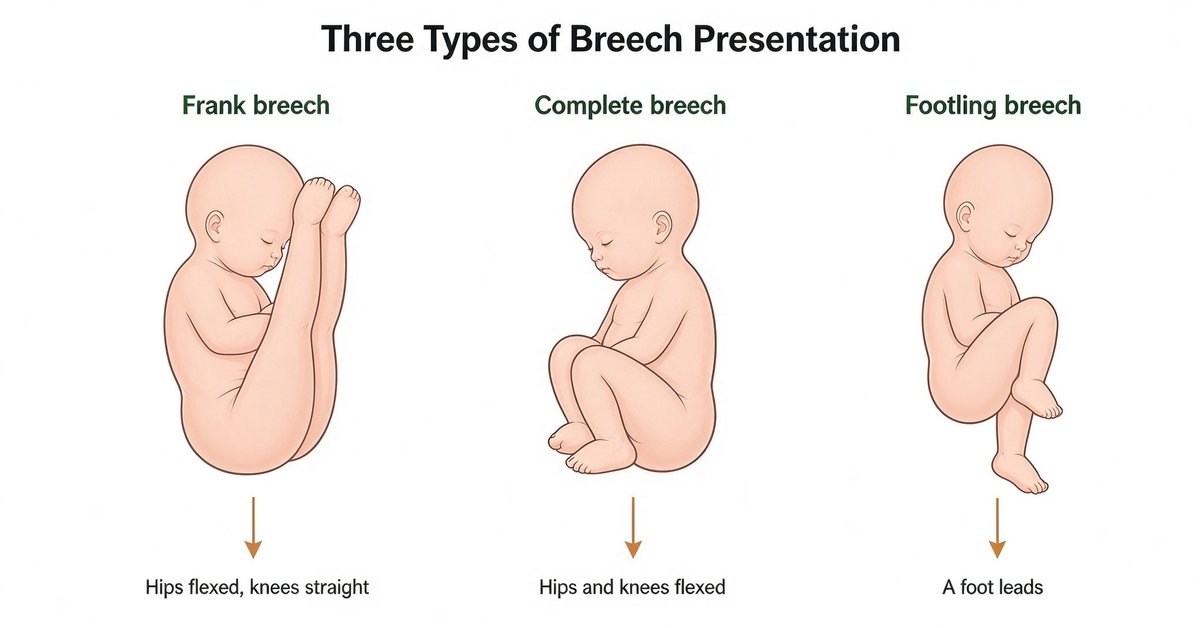
Figure 2. Frank, complete, and footling breech.
Common Points of Confusion When Teaching
- “Anterior” refers to the mother’s body, not the baby’s. In occiput anterior, the back of the baby’s head points to the front of the mother. The baby is facing her back.
- Position can change during labor. A transverse position at the inlet is normal. Students should treat OT as a warning sign only when it persists late in labor.
- Face and brow are cephalic presentations. The head still comes first, so students sometimes call them vertex. The difference is whether the neck is flexed or extended.
- Naming a malpresentation is not predicting an outcome. It tells the care team what to watch for and plan around.
Conclusion
Lie, presentation, and position answer three separate questions: which way the baby lies, which part comes first, and which way that part faces. Most births combine a longitudinal lie, a vertex presentation, and an occiput anterior position. Occiput posterior, face, brow, breech, transverse lie, and compound presentations each change the diameter or shape that must pass through the pelvis. That is why they can slow or stop labor. Teach the vocabulary first, then show each variation on a model so students can see the size difference rather than memorize it.
Frequently Asked Questions
What is fetal attitude, and how is it different from position?
Attitude describes how flexed the baby’s head is. In the normal attitude the head is well flexed, with the chin on the chest. Sinciput, brow, and face presentations are progressively more deflexed, meaning the neck is extended further at each step. Position describes something else: which way the occiput or chin faces in the mother’s pelvis. Students should record both, because a change in either one changes the size of the head that must pass through the pelvis.
What is the difference between fetal station and fetal position?
Station describes how far the presenting part has descended, while position describes which way it is turned. Station is measured in centimeters above or below the mother’s ischial spines. Level with the spines is 0 station, levels above are written as minus numbers, and levels below as plus numbers. Both are recorded at each cervical examination, along with dilation and effacement, so students should learn to describe them together.
How do clinicians determine fetal position during labor?
Abdominal palpation with the Leopold maneuvers gives a first estimate of lie and presentation, and ultrasound can confirm it when the findings are unclear. In labor, position is usually assessed by vaginal examination: the examiner feels the sutures and fontanelles of the baby’s skull and relates them to the mother’s pelvis. This is subjective, and it becomes harder when scalp swelling (caput succedaneum) hides the landmarks, especially in occiput posterior. Intrapartum ultrasound is more accurate than vaginal examination for identifying malposition, and some guidelines endorse it to confirm the occiput position before an instrumental delivery. For learners, this is why finding the sutures and fontanelles is worth practicing many times before clinical placements.
Sources
- Moldenhauer JS. Fetal Presentation, Position, and Lie (Including Breech Presentation). MSD Manual Professional Edition; reviewed/revised 2024. https://www.msdmanuals.com/professional/gynecology-and-obstetrics/intrapartum-complications/fetal-presentation-position-and-lie-including-breech-presentation
- Hutchison J, Mahdy H, Jenkins SM, Hutchison J. Normal Labor: Physiology, Evaluation, and Management. In: StatPearls. StatPearls Publishing; updated February 15, 2025. https://www.ncbi.nlm.nih.gov/books/NBK544290/
- Makajeva J, Ashraf M. Delivery, Face and Brow Presentation. In: StatPearls. StatPearls Publishing; updated November 25, 2024. https://www.ncbi.nlm.nih.gov/books/NBK567727/
- Moldenhauer JS. Management of Normal Labor. MSD Manual Professional Edition; last updated April 2025. https://www.msdmanuals.com/professional/gynecology-and-obstetrics/normal-labor-and-delivery/management-of-normal-labor
- Malvasi A, Tinelli A, Barbera A, et al. Occiput posterior position diagnosis: vaginal examination or intrapartum sonography? A clinical review. J Matern Fetal Neonatal Med. 2014;27(5):520-526. https://doi.org/10.3109/14767058.2013.825598
- Ghi T, Dall’Asta A. Sonographic evaluation of the fetal head position and attitude during labor. Am J Obstet Gynecol. 2024;230(3S):S890-S900. https://doi.org/10.1016/j.ajog.2022.06.003
This article is for education and training purposes only. It explains fetal position and presentation for teaching and is not guidance for assessing or managing a real pregnancy or delivery. If you are pregnant and have questions about your baby’s position, talk with your midwife or doctor.
Training Resources
MEDTACEDU’s Childbirth Education Model Set with Pelvis and Fetal Model includes a fetal doll and a flexible female pelvis, so instructors can show every position and presentation in this guide: LOA and ROA, occiput transverse and posterior, face and brow, the three breech types, transverse lie, and compound presentation. The same set is used to teach the 7 cardinal movements of labor.
Browse MEDTACEDU’s Women’s & Reproductive Health Models for related training models.