The umbilical cord connects the baby to the placenta until birth, and midwifery and obstetric students meet it at every stage of a delivery. They need to recognize a cord wrapped around the neck, tell a true knot from an ordinary loop, know what “delayed cord clamping” means, and recognize when a healing stump is normal and when it is a warning sign. This guide covers those four topics and shows how to demonstrate each one with a fetal doll, pelvis, and placenta with an attached cord.
Nuchal Cord: When the Cord Is Around the Neck
A nuchal cord is an umbilical cord that wraps 360 degrees around the baby’s neck. It is one of the most common cord findings at birth. Reported rates vary between studies, but a nuchal cord is found in roughly 10–29% of births, and the rate rises as pregnancy advances. Most are a single loop. Two or more loops are much less common.
Nuchal cords are usually described in two ways:
- Loose or tight. A loose cord can be slipped over the head easily. A tight cord cannot, because there is not enough slack.
- Type A or type B. In type A, the placental end of the cord crosses over the fetal end, so the loop can slide free on its own. In type B, the placental end passes under the fetal end and forms a locked loop that cannot undo itself.
Most nuchal cords cause no harm. Babies move freely in the uterus, and many loops form and unwind during pregnancy. A loop is a concern mainly when it is tight enough to reduce blood flow through the cord. How a nuchal cord is handled at the moment of birth is taught in supervised clinical training and is not covered here.
True Knots in the Umbilical Cord
A true knot forms when the baby passes through a loop of its own cord, tying it into an actual knot. True knots are uncommon. Most studies report them in about 0.3–2% of pregnancies. A large study of more than 69,000 deliveries found a rate of 1.2%.
They are more likely when the baby has extra room or extra cord to move through, for example with:
- a long umbilical cord
- excess amniotic fluid (polyhydramnios)
- twins sharing one amniotic sac (monoamniotic twins)
- a mother who has had many previous births
Most true knots stay loose and do not affect the baby, because the gel around the cord vessels (Wharton’s jelly) cushions them. The risk is that a knot tightens, especially during labor as the baby descends, and reduces blood flow. True knots are linked to a higher rate of stillbirth in some studies, although findings differ, and many knots are only discovered after the birth.
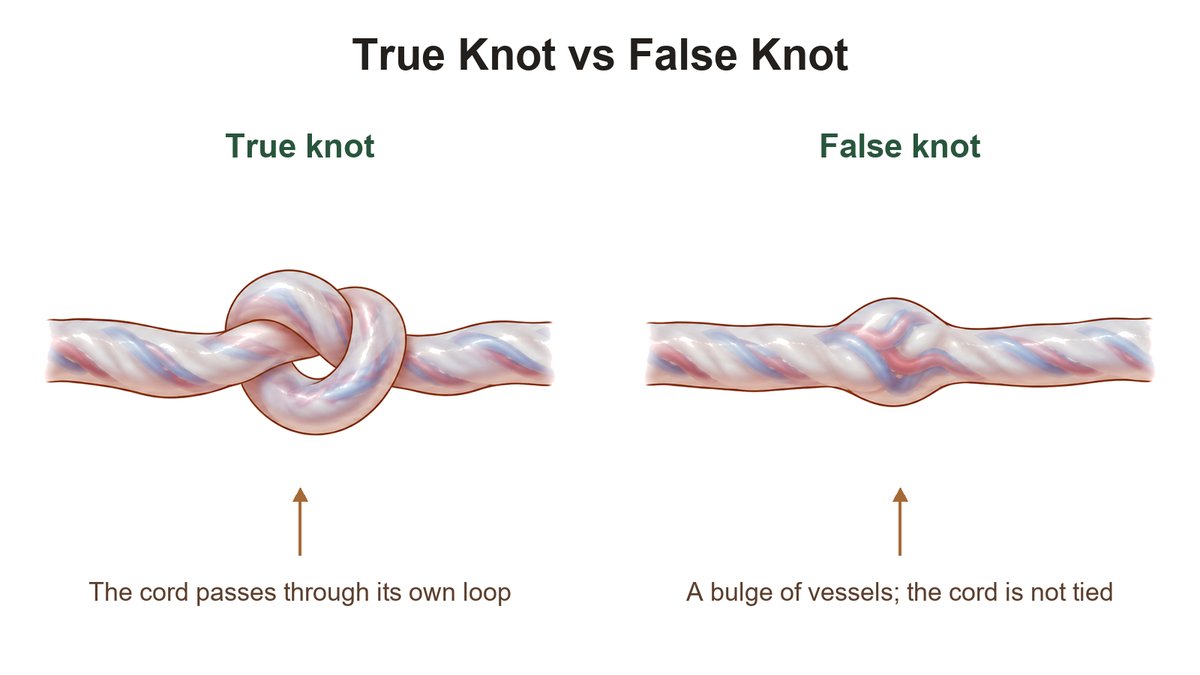
Figure 1. A true knot compared with a false knot.
Cord Clamping: Immediate and Delayed
After birth, the cord is clamped and cut to separate the baby from the placenta. The key teaching point is timing, because blood keeps moving from the placenta to the baby for a short time after birth.
- Immediate cord clamping means the cord is clamped within the first seconds after birth.
- Delayed (deferred) cord clamping means waiting before clamping, so more blood passes to the baby.
Major guidelines now favor delay for most births:
- ACOG (American College of Obstetricians and Gynecologists) recommends delaying clamping for at least 30–60 seconds after birth in vigorous term and preterm infants. A 2025 ACOG update revises the guidance for babies born before 37 weeks.
- WHO (World Health Organization) recommends that the cord is not clamped earlier than 1 minute after birth.
Both organizations describe situations in which immediate clamping is still appropriate, such as when the baby needs resuscitation straight away. Which approach is used for a particular birth is a clinical decision made by the care team.
Cutting the Cord
The cord is usually clamped in two places a few centimeters apart, and it is cut between the two clamps with sterile scissors. The clamp nearest the baby stays on the stump. This keeps both cut ends closed: one toward the baby and one toward the placenta.
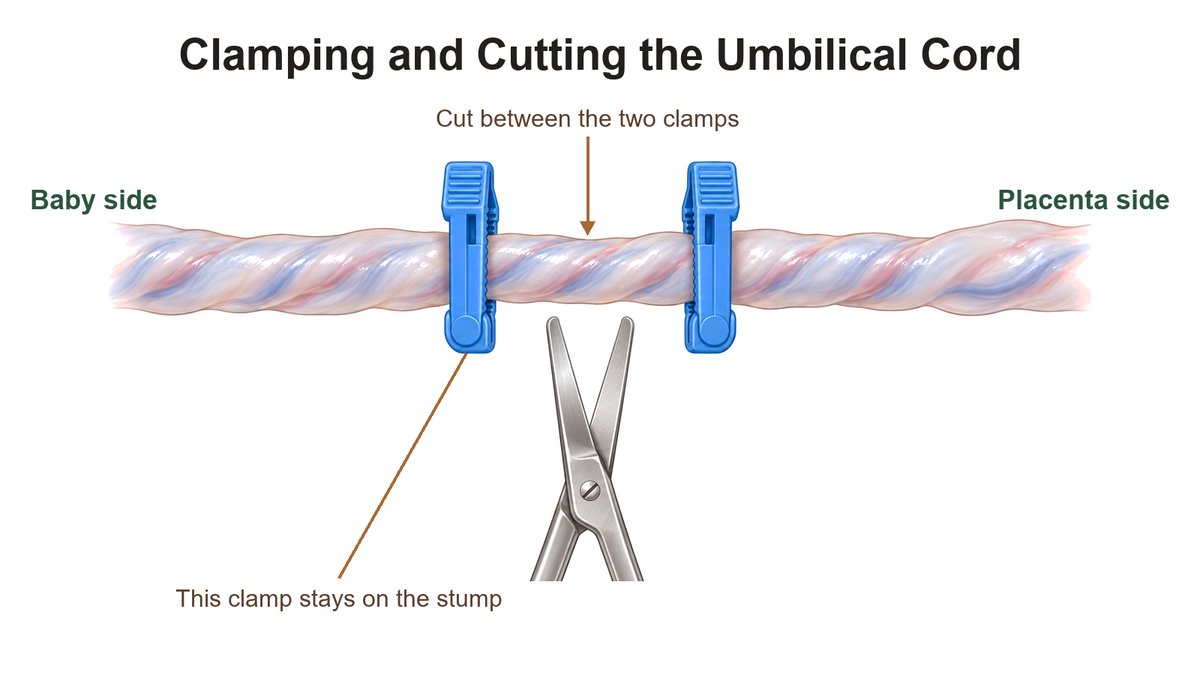
Figure 2. The cord is cut between two clamps; the baby-side clamp stays on the stump.
Umbilical Cord Stump Care
After cutting, a short stump of cord remains attached at the newborn’s umbilicus. Students should know what normal healing looks like, what current guidelines recommend, and which findings must be reported.
Points to remember:
- Normal course. The stump dries, shrinks, and darkens from moist and pale to brown or black, then separates. According to the American Academy of Pediatrics, it should dry and fall off by about 3 weeks of age. A few drops of blood at separation are normal.
- Dry cord care is the standard. The WHO recommends clean, dry cord care: the stump is kept clean and dry, left uncovered or loosely covered, and nothing is applied to it. The diaper is folded below the stump so it is not soaked by urine.
- Chlorhexidine is the exception, not the rule. The WHO’s 2022 recommendations limit chlorhexidine application to settings where harmful traditional substances, such as animal dung, are commonly applied to the cord. Earlier WHO guidance tied it to home births in high-mortality settings, so check which version a textbook is quoting.
Warning signs to report: Infection of the stump and surrounding skin is called omphalitis. It is uncommon but can be serious in newborns. Findings that need prompt assessment include:
- redness or hardening (induration) of the skin around the base of the stump, especially if it is spreading
- swelling or tenderness around the umbilicus
- pus or a foul-smelling discharge
- active bleeding from the stump
- fever, poor feeding, or lethargy, which suggest the infection is affecting the whole body
Cord care is part of routine newborn care, alongside procedures such as the newborn heel stick and newborn circumcision.
Demonstrating Cord Problems on a Model
Cord findings are easier to remember once students have seen them on a model. A fetal doll, a pelvis, and a placenta with an attached cord are enough for all four topics.
- Nuchal cord. Wrap the cord once around the doll’s neck. Show a loose loop that slides over the head, then shorten the slack to show why a tight loop does not. Lay the cord over and under itself to show the difference between type A and type B.
- True knot. Pass the doll through a loop of its own cord and draw the loop up into a knot. Ask students what could make the knot tighten during labor.
- Clamping and cutting. With the doll delivered and the placenta still in place, show where the two clamps are placed and where the cut is made between them. Mark the positions rather than cutting the model’s cord.
- Stump care. Use the doll’s umbilicus to show where the stump sits and where the diaper is folded, then quiz students on normal healing versus the warning signs of omphalitis.
A demonstration model shows anatomy and positions. It does not reproduce how a real cord feels or behaves, and clinical skills such as managing a nuchal cord at birth are taught under supervision.
Conclusion
The umbilical cord appears in four common teaching topics: nuchal cords, true knots, cord clamping, and stump care. Nuchal cords are common and usually harmless, while true knots are rare but matter if they tighten. Current guidelines favor delaying cord clamping for most births, and dry cord care is the standard for the stump. Teach the definitions first, then show each finding on a model so students can see how the cord is arranged.
Frequently Asked Questions
Can a nuchal cord or true knot be seen on ultrasound before birth?
Sometimes. Ultrasound with color Doppler can show cord loops around the baby’s neck, but it cannot reliably tell a loose loop from a tight one, and loops often form and unwind before birth. True knots are harder to detect. Most are found only when the cord is examined after delivery.
What is a false knot in the umbilical cord?
A false knot is not a knot at all. It is a bulge on the cord where the blood vessels are longer than the cord and fold back on themselves, or where Wharton’s jelly collects. It looks like a knot from the outside, but the cord is not tied, and it has no clinical significance. Students should learn to tell it apart from a true knot when examining a cord after birth.
How long is a normal umbilical cord?
At term, the umbilical cord is usually about 50–70 cm long. A cord shorter than about 35–40 cm is described as short, and one longer than about 70 cm as long, although the exact cutoffs vary between sources. Length matters for the topics above: a long cord leaves more slack, and long cords are associated with more nuchal cords and more cord knots.
Sources
- Peesay M. Nuchal cord and its implications. Maternal Health, Neonatology and Perinatology. 2017;3:28. https://link.springer.com/article/10.1186/s40748-017-0068-7
- Hershkovitz R, Silberstein T, Sheiner E, et al. Risk factors associated with true knots of the umbilical cord. Eur J Obstet Gynecol Reprod Biol. 2001;98(1):36–39. https://pubmed.ncbi.nlm.nih.gov/11516797/
- American College of Obstetricians and Gynecologists. Delayed Umbilical Cord Clamping After Birth. Committee Opinion No. 814. Obstet Gynecol. 2020;136:e100–e106. https://www.acog.org/clinical/clinical-guidance/committee-opinion/articles/2020/12/delayed-umbilical-cord-clamping-after-birth
- World Health Organization. Guideline: Delayed umbilical cord clamping for improved maternal and infant health and nutrition outcomes. 2014. https://www.who.int/publications/i/item/9789241508209
- World Health Organization. WHO recommendations on maternal and newborn care for a positive postnatal experience. 2022. https://www.who.int/publications/i/item/9789240045989
- Kaplan RL. Omphalitis: Clinical Presentation and Approach to Evaluation and Management. Pediatr Emerg Care. 2023;39(3):188–189. https://pubmed.ncbi.nlm.nih.gov/36853079/
- Radiopaedia. Short umbilical cord. https://radiopaedia.org/articles/short-umbilical-cord
- Radiopaedia. Long umbilical cord. https://radiopaedia.org/articles/long-umbilical-cord
- American Academy of Pediatrics. Umbilical Cord Care in Newborns. HealthyChildren.org. https://www.healthychildren.org/English/ages-stages/baby/bathing-skin-care/Pages/Umbilical-Cord-Care.aspx
This article is for education and training purposes only. It explains umbilical cord findings and cord care for teaching and is not guidance for managing a real pregnancy, birth, or newborn. Clinical care is provided by qualified professionals following local protocols.
Training Resources
MEDTACEDU’s Childbirth Education Model Set with Pelvis and Fetal Model includes a fetal doll, a female pelvis, and a placenta with an attached umbilical cord, so instructors can demonstrate nuchal cords, true knots, and clamp positions in one session. The same set is used to teach fetal position and presentation, the 7 cardinal movements of labor, and types of breech presentation.
Browse MEDTACEDU’s Women’s & Reproductive Health Models for related training models.