Deciding whether to circumcise a baby boy is one of the first big choices many new parents face, and it is rarely a purely medical one. This guide lays out what infant circumcision is, the evidence-based benefits and risks, what major medical organizations actually recommend, whether it hurts the baby, and the practical factors that go into the decision — neutrally, so you can make an informed choice. For what the procedure itself involves and how to care for your baby afterward, see our companion guide on the newborn circumcision procedure and aftercare.
Important: This article is for general education and does not recommend for or against circumcision — that is a personal decision for each family. It is not medical advice. Discuss your specific situation with your pediatrician or a qualified clinician.
What Is Infant Circumcision?
Circumcision is the surgical removal of the foreskin — the fold of skin that covers the head (glans) of the penis. In a newborn circumcision it is usually done within the first few days to weeks of life, often before the baby leaves the hospital, as a quick procedure with local pain relief.
It is one of the oldest and most common surgical procedures in the world, performed for a mix of medical, religious, cultural, and personal reasons. Rates vary enormously between countries and communities, which is a good reminder that there is no single “right” answer — only the choice that is right for a given family.
Why Families Choose — or Don’t Choose — Circumcision
Parents weigh several different kinds of reasons, and they are all legitimate:
- Religious and cultural. For many Jewish and Muslim families, and in some cultures more broadly, circumcision is an important tradition or religious observance.
- Medical. Some parents are persuaded by the potential health benefits below, or have a family history that makes them lean toward it.
- Social and family. Some want the child to match a father or sibling, or to fit the norm in their community.
- Personal preference and ethics. Others prefer to leave the decision to the child later in life, or feel a healthy foreskin should not be removed without a medical need.
There is no medical requirement to circumcise a healthy baby. It is an elective decision in most cases.
Potential Benefits (What the Evidence Shows)
Research has identified several health benefits associated with circumcision. It is important to keep them in proportion — most are modest in absolute terms:
- Lower risk of urinary tract infections (UTIs) in infancy. Circumcised baby boys have a notably lower rate of UTIs in the first year, although UTIs are uncommon either way.
- Easier hygiene. Without a foreskin, the area is simpler to keep clean, and conditions affecting the foreskin (such as tight foreskin, or phimosis) cannot occur.
- Lower risk of some sexually transmitted infections later in life, including a reduced risk of HIV acquisition in heterosexual men, shown most clearly in high-prevalence settings.
- Lower risk of penile cancer, which is already a rare cancer.
- Prevention of foreskin problems that sometimes require circumcision later (recurrent infections, scarring).
These benefits are real but, for an individual healthy baby in a low-risk setting, the absolute gain is small — which is exactly why medical bodies stop short of recommending it for everyone.
Potential Risks and Downsides
Circumcision is generally very safe when done by an experienced provider, but no procedure is risk-free:
- Pain during and after the procedure — which is why pain relief is now standard (see below).
- Bleeding and infection — the most common complications, usually minor and treatable.
- Too much or too little skin removed, or healing issues such as adhesions or, rarely, narrowing of the urinary opening (meatal stenosis).
- Rare surgical complications, which are uncommon in routine newborn circumcision but rise with age if done later.
- It is permanent and irreversible — a consideration for parents who would rather leave the choice to the child.
What Major Medical Organizations Say
This is where parents often look for a clear “yes” or “no,” and the honest answer is that the major bodies deliberately stay neutral:
- The American Academy of Pediatrics (AAP) concludes that the health benefits of newborn circumcision outweigh the risks, but that they are not great enough to recommend routine circumcision for all boys — so the decision is left to families, ideally with good information and access to the procedure for those who choose it.
- The CDC has issued guidance in a similar spirit, emphasizing informed parental choice.
- Several European medical bodies take a more neutral-to-cautious stance, viewing routine newborn circumcision as not medically necessary.
The common thread: this is considered a reasonable, informed choice — not a medical necessity and not something to be discouraged for families who want it.
Does Circumcision Hurt the Baby?
Yes — without pain control it is painful, which is why effective pain relief is now the standard of care. Clinicians use a local anesthetic (such as a dorsal penile nerve block or ring block), sometimes with a numbing cream and a sugar (sucrose) solution for comfort. With proper pain management, babies tolerate the procedure well and settle quickly afterward. We cover exactly how this is done in the procedure and aftercare guide.
“Is It Too Late?” Timing and Age
Circumcision is easiest and lowest-risk in the newborn period — typically the first few weeks — when it can be done with local anesthesia as a brief bedside procedure.
It is not strictly “too late” after that: circumcision can be performed at any age. But beyond the newborn period it usually becomes a more involved operation, often requiring general anesthesia and a longer recovery, which is why families who want it are generally encouraged to decide early. If you have missed the newborn window, talk to your clinician about the options.
How to Decide
There is no universally correct choice — only the one that fits your family. It helps to:
- Separate the reasons. Be clear about which of your reasons are medical, religious, cultural, or personal — all are valid, but naming them makes the decision clearer.
- Weigh the modest medical benefits against the small risks for your specific situation.
- Consider timing. If you lean toward it, the newborn period is the simplest window.
- Talk to your pediatrician about your baby’s health and any family history, and ask about pain relief and who would perform it.
Whatever you decide, an informed, unhurried choice is the goal.
Frequently Asked Questions (FAQ)
Is circumcision medically necessary for a healthy baby?
No. For a healthy newborn it is an elective choice, not a medical requirement. Circumcision becomes medically necessary only in specific situations (for example, certain foreskin conditions later in life), which are uncommon.
Can we decide later and let our son choose as an adult?
Yes — some families deliberately wait so the child can decide for himself. The trade-off is that circumcision later in life is a bigger procedure, usually under general anesthesia, with a longer recovery than in the newborn period.
Does circumcision affect sexual function or sensation later in life?
Large reviews have not found that circumcision meaningfully reduces sexual function, sensitivity, or satisfaction. This is an area people worry about, but the weight of evidence is reassuring.
Is circumcision covered by insurance?
It varies widely by country, insurer, and whether it’s considered elective. Check your specific coverage in advance, since routine newborn circumcision is sometimes treated as elective and not fully covered.
What if my baby is premature or has a medical condition?
Circumcision is usually postponed if a baby is premature, unwell, or has certain anatomical differences (some of which mean it should not be done at all in the newborn period). Your clinician will advise on the right timing — or whether to avoid it.
Sources
- American Academy of Pediatrics (AAP) — Circumcision policy statement and technical report
- Centers for Disease Control and Prevention (CDC) — Information on male circumcision and health
- World Health Organization (WHO) — Male circumcision and HIV prevention
- NHS — Circumcision in babies and children
- StatPearls / NCBI Bookshelf — Neonatal Circumcision
This article is for general education only and does not recommend for or against circumcision, which is a personal decision for each family. It is not a substitute for professional medical advice. Discuss your circumstances with a qualified clinician.
🩺 For Students, Clinicians, and Training Teams
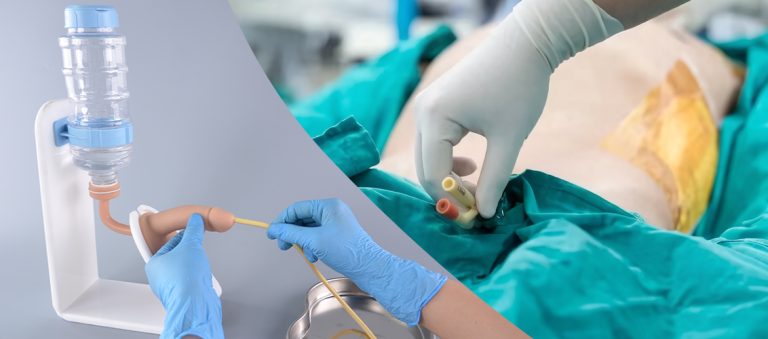
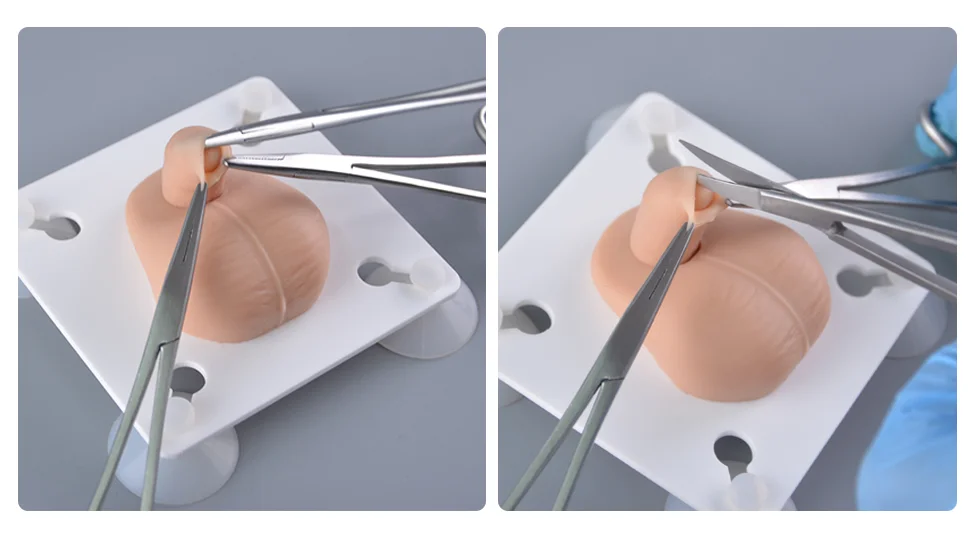
Newborn circumcision is a procedural skill that should be practiced before it’s performed on a patient. Our Infant Circumcision Training Model Kit comes with replaceable foreskins so trainees can rehearse clamp placement and technique repeatedly on a realistic model.