Wound Dressing Types: How to Choose by Exudate, Depth, and Wound Bed
Compare wound dressing types by exudate, depth, wound condition, and skin tolerance, including film, foam, hydrogel, alginate, and contact layers.
CONTACT EMAIL: [email protected]

Contact: [email protected]
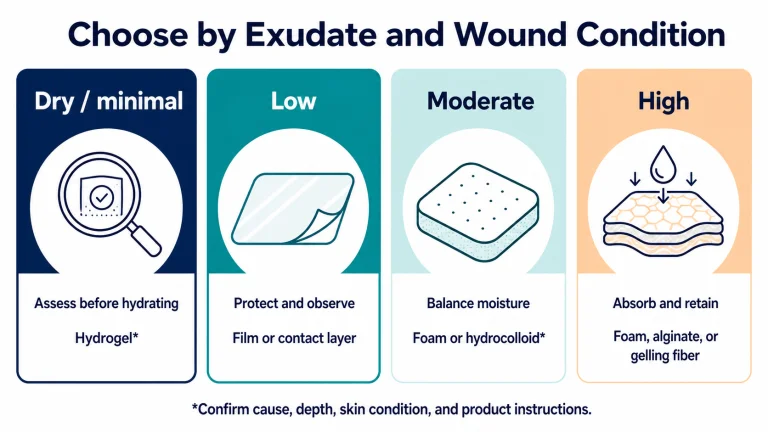
Compare wound dressing types by exudate, depth, wound condition, and skin tolerance, including film, foam, hydrogel, alginate, and contact layers.
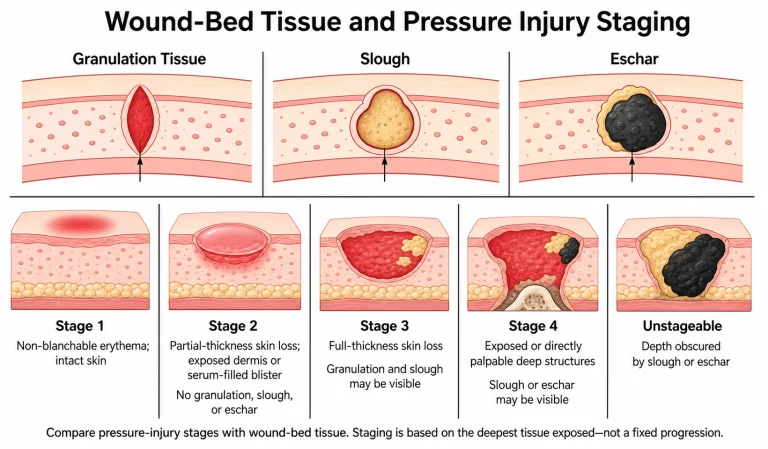
Granulation tissue is the new, vascular tissue that fills an open wound as it heals. Healthy granulation is usually a welcome sign, but color alone cannot tell you whether a wound is progressing normally. Red tissue may be healthy granulation, fragile hypergranulation, inflammation, or another abnormal change; yellow or black tissue may represent slough or…
A useful wound packing scenario changes more than the shape of the wound. It gives the learner a different access problem, decision, failure signal, or reassessment challenge. This guide shows instructors how to build five progressive stations—from a visible laceration cavity to a mixed scenario—without making the exercise unnecessarily complicated. Three Principles for Every Station…
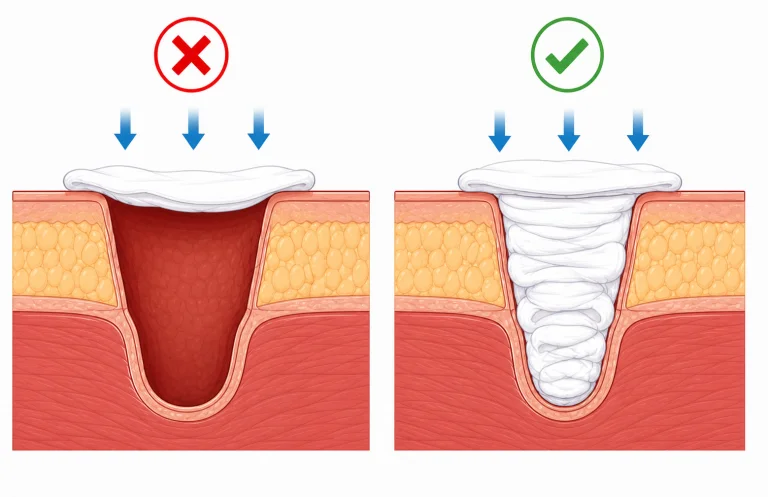
A wound can look packed and still be uncontrolled. This guide helps instructors recognize ten distinct failure patterns—not ten variations of “the learner packed it wrong.” By the end, you will be able to separate a poor method choice from a missed source, a loose fill, a pressure break, and a failed reassessment, then give…
Use this seven-step bleeding control training checklist to assess a complete response: make the scene safe and activate help; expose the wound; choose direct pressure, wound packing, or a limb tourniquet; perform the selected method; confirm that bleeding stopped; reassess the person; and give a clear handoff. This article is an educational framework, not a…
For severe external bleeding, make sure the scene is safe, call emergency services, find the source, and apply steady, firm direct pressure. If life-threatening bleeding is from an arm or leg and is not controlled by pressure—or pressure cannot be maintained—use a commercial tourniquet if available and you are trained. For an appropriate deep wound…
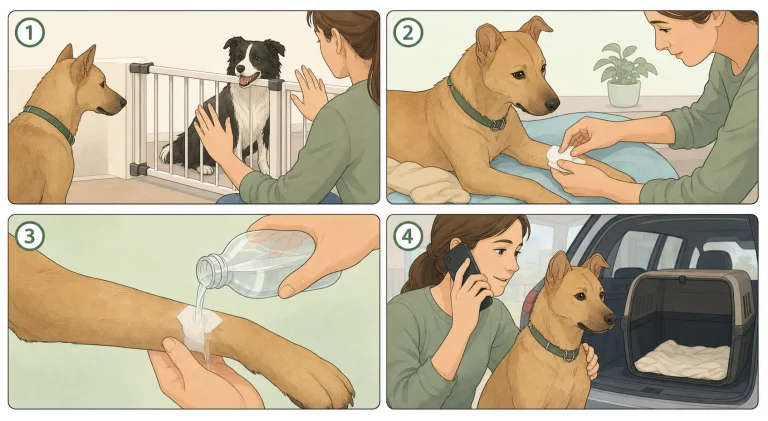
The dogs are finally separated, and your dog seems alert—but you find a small puncture under the fur. It may look minor, yet a bite can crush or tear tissue well below the skin and can injure the chest, abdomen, neck, joints, or internal organs. Calm first aid can reduce further harm, but it cannot…

A dog that suddenly refuses to use one leg may have a fracture, but severe sprains, joint dislocations, torn ligaments, paw injuries, and neurologic problems can look similar. You cannot reliably confirm or rule out a broken bone by watching the dog walk or gently feeling the leg at home. A dog leg fracture —…
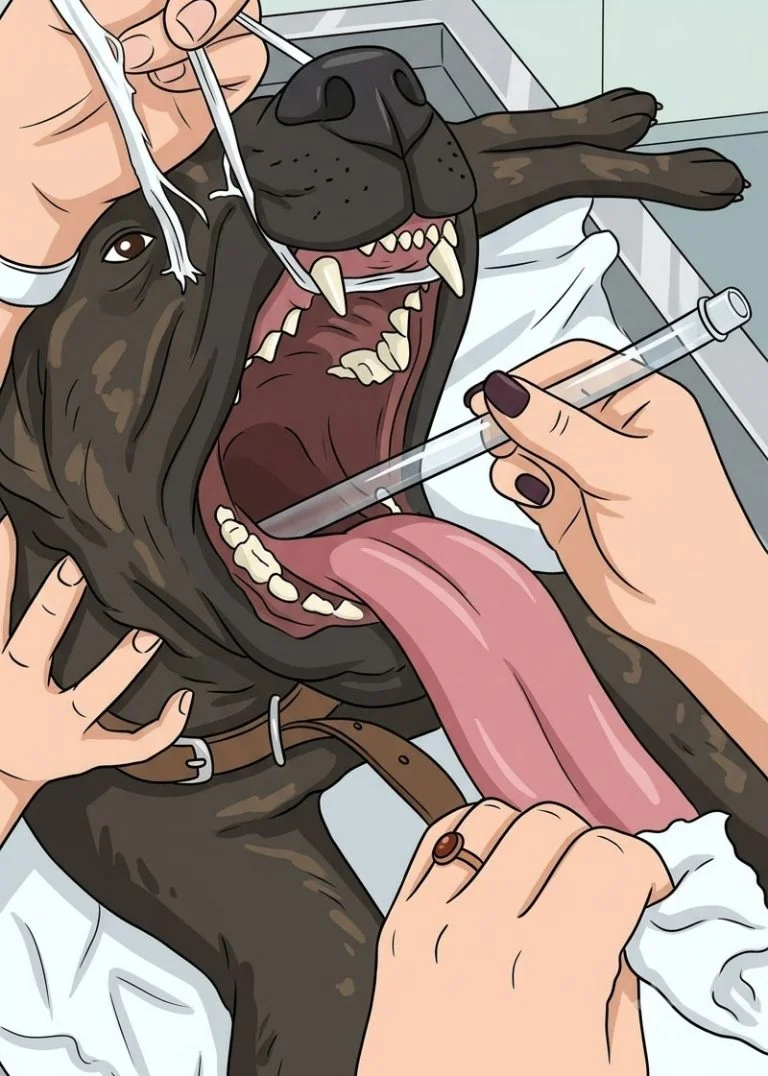
Canine intubation gives an anesthetized dog a patent airway, a route for oxygen and inhalant anesthetic, and a way to provide positive-pressure ventilation when needed. It can also reduce aspiration risk when the airway is no longer able to protect itself. It is not a procedure for an awake pet or an untrained owner. Intubation…

During a pelvic exam, a clinician may notice that the cervix looks red, swollen, bumpy, enlarged, or different from expected. These changes can be worrying, but many have a benign cause. It also helps to separate two parts of the visit: A Pap test does not diagnose a visible lump, ulcer, or polyp. In the…
End of content
End of content
Don't have an account yet? Sign up
No items in your cart. Go on, fill it up with something you love!
Start Shopping Now